Prepare for winter weather and campus closures
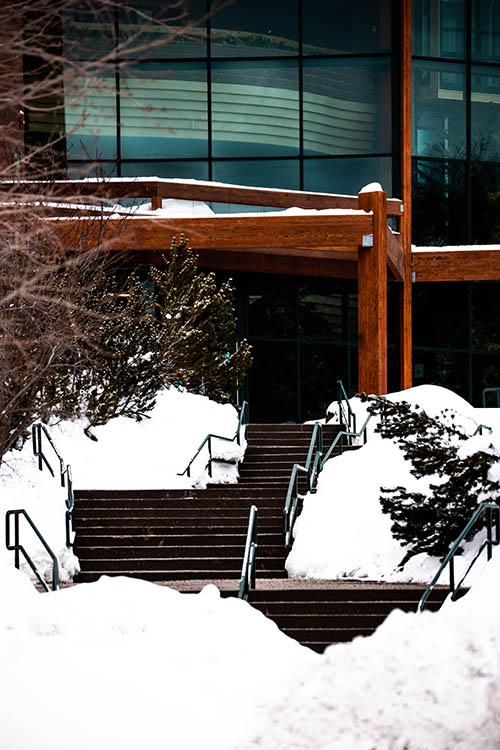
Newfoundland and Labrador is known for its intense, and sometimes dangerous, weather. Extreme weather may occasionally lead to delayed openings, full-day or mid-day closures. Cancellations and closures will be promptly communicated via the MUN Safe app, social media and email notifications.
Deciding to close
The decision to cancel on-campus classes and labs is made by the vice-president (or their designate), who receives advice from several university units such as Facilities Management (FM).
FM works closely with weather forecasters, provincial government departments, including the Department of Transportation and Infrastructure, City of Corner Brook, College of the North Atlantic, Newfoundland and Labrador schools and others as weather systems develop and then provides the information to the president.
Closure communication
The university has a plan in place to keep you informed of cancellations and closures.
Advisories for late openings and all-day closures are typically issued by 7 a.m. If Grenfell does not issue a closure message by approximately 7 a.m., the university will open. As a reminder, we do not issue announcements regarding opening as usual.
MUN Safe is the primary communication tool for informing campus communities of weather-related closures and emergency information. All university community members are encouraged to download the app; ensure your campus is selected and your phone is set to receive notifications from MUN Safe.
If you have a new phone, you should delete and download the MUN Safe app again to ensure proper notification function. You can also sign up for email notifications. Other troubleshooting tips are available.
For a closure of the university’s facilities in St. John’s, cancellation notices should be understood to include all faculties, schools, units and on-campus activities in that area, including the Centre for Research and Innovation and Western Regional School of Nursing.
As a separately incorporated entity, The Marina Redmond Centre will issue its own notifications.
For life safety reasons, like potential for uncleared emergency exits, when campus is closed, buildings will be closed with the exception of residence buildings and the dining hall. Unless required to be on campus, individuals should not come to campus.
If inclement weather happens on weekends, holidays or after hours, the responsibility to share event cancellations rests with organizers, while keeping in mind that snow clearing may have reduced service after hours. If you have an event scheduled over a weekend with inclement weather forecasted, you should contact FM to discuss your circumstances.
Teaching and learning
In the event of a campus closure, on-campus classes and activities are cancelled. Students and instructors will be able to access remote and online courses via Brightspace, and unless individual instructors advise their students otherwise, all remote and online course activities and deliverables will continue as scheduled. Instructors are asked to discuss with their students in advance how they will communicate any adjustments to their schedule.
If adverse weather leads to widespread power outages in the region, the university will announce both restrictions to campus access and suspension of online classes.
For employees
The university is committed to keeping campuses as safe and accessible as possible for those who must access campus.
Employees who normally work on campus and have not been instructed to report to work, as well as employees approved to work remotely, are not required to work during a university closure.
As a reminder, all academic and administrative units are required to have up-to-date business continuity plans. Leadership teams should review plans and consider required updates.
Be prepared and stay safe
Off-campus students, faculty and staff are encouraged to prepare a 72-hour emergency kit that includes fresh water, non-perishable food and flashlights. It’s also important to ensure you have appropriate clothing to stay warm and footwear for safety. Drivers should have a small shovel and a snow-clearing brush to fully clear vehicle windows.
Pedestrians are recommended to wear bright, reflective clothing, and drivers and pedestrians should always exercise caution when driving or walking near operating snow equipment.
If you encounter an issue that could present an accessibility or safety challenge, report it using the report feature in the MUN Safe app and provide as many details as possible. Individuals encountering accessibility challenges can call Campus Enforcement and Patrol’s non-emergency number at 709-637-6210 for immediate assistance.