Students
Ph.D. Candidates:
Mary Clinton 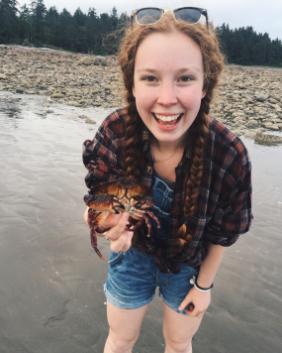
Growing up in coastal British Columbia, on the traditional territory of the Coast Salish Peoples, I have always loved and been fascinated by the ocean. In 2017, I received my BSc (Hons.) in Biology at Simon Fraser University, where I studied the impact of thermal stress on early development of intertidal seaweeds. I also spent four months at the Bamfield Marine Sciences Centre, where I discovered my passion for marine ecology. I am now excited to be living and learning in St. John's, NL. When I'm not studying or working on my project, you'll likely find me hiking, rock climbing, or tackling a good crossword!
Ocean Frontier Institute, Module E: Ecosystem Indicators for a Changing Ocean
Project Title: Ecosystem Functioning in Arctic Benthic Environments: The Roles of Food Quantity and Quality
Project Description: Anthropogenic climate change is driving unprecedented environmental change and biodiversity loss, with potential effects on how Earth’s ecosystems function. These changes are particularly evident along high-latitude coastlines. For example, sea ice provides habitat for tiny ice algae that eventually sink and become food for organisms on the ocean bottom. Given the lengthening of ice-free periods due to climate change, the relative contribution of ice algae to Arctic and sub-Arctic food webs will presumably change. Determining how this shift in food quality may affect seafloor ecosystem functioning will be crucial to understanding the impact of sea ice loss on marine ecosystems.
Contact: meclinton@mun.ca
Benjamin King 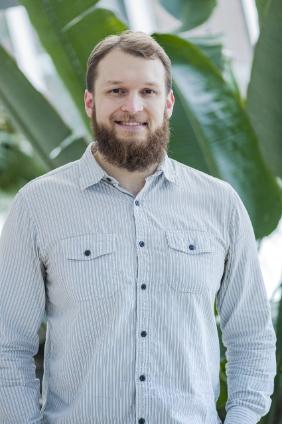
Memorial University of Newfoundland, Department of Ocean Sciences
I originally hail from the small town of Elora, Ontario. From a young age, I spent many of my summers fishing the waters of Lake Erie, where I became fascinated with fish biology and how the surrounding environment influences fish movement. I travelled east to complete my BSc (Hons) Co-op in Marine Biology with a minor in Statistics from Dalhousie University. I fell in love with the east coast during my time in Nova Scotia and I now am fortunate enough to call St. John's my home. When I'm not working on my project, you'll likely find me playing any sort of team sport around the city, hiking, cooking or taking long walks on the beach.
Ocean Frontier Institute, Module E: Ecosystem Indicators for a Changing Ocean
Project Title: Understanding how environmental fluctuation alters the spatial ecology of juvenile cod in subarctic ecosystems
Project Description: My project investigates how shifts in environmental conditions and changes in biotic community assemblages alter the spatial ecology of juvenile cod in three different subarctic regions across temporal and spatial scales. Using several acoustic telemetry arrays, I aim to quantify the dispersal and home range of juvenile Greenland cod according to changes in temperature within Nain, Labrador, the Gilbert Bay Marine Protected Area, and Newman Sound, Newfoundland. I will compare the movement estimates generated from each study site to investigate how juvenile cod movement changes across this latitudinal gradient. Additionally, using footage collected from baited camera deployments over several seasons, I will characterize juvenile Greenland cod habitat use based on substrate type and macroalgal cover. This analysis will also include a comparison of relative species abundances for biotic community assemblages across seasons and habitat types.
Contact: bgcking@mun.ca
Danielle Quinn 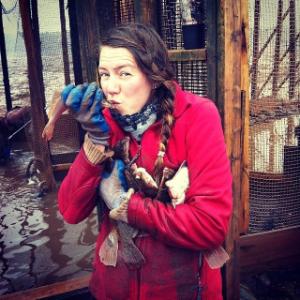
Hello! I am originally from New Brunswick, and received my BScH ('10) and MSc ('13) in Biology from Acadia University in Wolfville, NS. From 2013 - 2016, I enjoyed many hours in the field working on striped bass, skates, squid, salmon, crabs, and sturgeon as a research assistant, and helping new lab members keep their data and analyses organized and reproducible. I'm always ready to chat about pedagogy, programming, and my dogs, Mackerel and Juniper!
Project Title: The Role of Computing and Open-Source Software in Ecological Research & Marine Conservation
Project Description: When I started my Masters in 2010, I was introduced to the world of data, statistics, programming, and R, and have spent most of the last ten years developing these skills and exploring how computing and open source software is being applied to solve problems in ecology and conservation. My dissertation focuses on building accessible computational tools to address common challenges faced in conservation. This includes a web application that uses machine learning to make predictions about cryptic species identification, and an R package for quantifying shifts in ecological communities. I will also be discussing the emergence of the field of study known as ecoinformatics, the changing role of computing as a skill set in ecology, the increasing value of interdisciplinary collaborations in marine conservation, and how academic culture (across fields of study) is shaping the experiences of users and developers of open source software.
Contact: danielle.quinn@mun.ca
M.Sc. Candidates:
Alana Barton 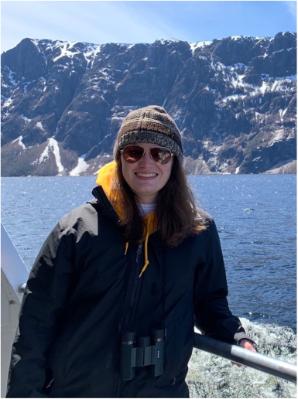
Growing up Michigan, I’ve always been fascinated with aquatic ecology being surrounded by the Great Lakes. In 2021 I received by BSc in Environmental Science from Michigan State University. I wanted to transition into marine ecology, having grown a passion for ocean sciences while in university. This eventually guided me into pursuing my master’s at Memorial University.
Project title: Variations in community biodiversity of juvenile fish in coastal Newfoundland: implications for environmental variability
Project description: Ocean temperatures have warmed significantly in recent decades, with anthropogenic greenhouse gas being the main contributor. The extent to which species can tolerate long-term heat stress is still largely unknown. With this, the frequency and intensification of extreme temperature events may cause dramatic shifts in marine species and a redistribution in ecological communities. Declines in abundance and diversity of coastal fishes are of considerable concern, given potential loss of an ecological resource. As a result, there has been a growing interest in assessing changes in coastal biodiversity due to environmental variability. My project aims to explore any potential impacts temperature variability may have had on the diversity of juvenile fish within Newman Sound, and whether there has been a considerable shift in species assemblages within sites and each measured year.
Contact: acbarton@mun.ca
Emma Charlebois 
I’m from Ottawa, Ontario, and despite the lack of an ocean, I developed a love for the ocean at a very young age. I went on to receive my BSc (Honours) in Biology at Queen’s University, where I took every opportunity to complete aquatic-based biology courses. After my third year, I finally got the opportunity to learn by the ocean when I took a two-week Marine Biology field course in St. Andrews, New Brunswick. During this course, I developed a passion for field work, research, and working with marine invertebrates. After this experience, I knew that I wanted to pursue a Master’s Degree close to the ocean and found that Memorial University is the perfect place to be. In my spare time, I enjoy reading, drawing, and hopefully exploring the best hiking locations that Newfoundland has to offer!
Project title: come back soon!
Contact: emma.charlebois@queensu.ca
Letitia Chen 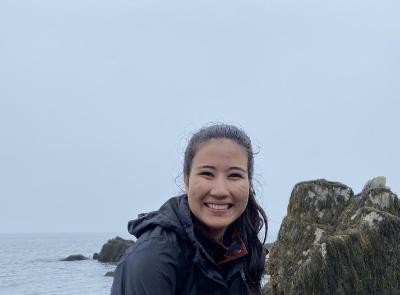
I grew up in Ottawa, Ontario – a city sorely lacking an ocean – and completed my B.Sc. in Biology at the University of Ottawa, specializing in ecology, evolution, and animal behaviour. I have been fascinated by fish and marine science since my first viewing of Finding Nemo at age 3, and my curiosity has not let up in the 20 years since. In the final year of my undergrad, I did a two-week Marine Biology field course in the Bay of Fundy, which excited me enough to start planning to call St. John’s home and happily pursue marine research at Memorial. Outside of work and research, I hope to experience the best eats and ocean views that Newfoundland and Labrador offer!
Project title: come back soon!
Contact: lypchen@mun.ca
Amy McAllister 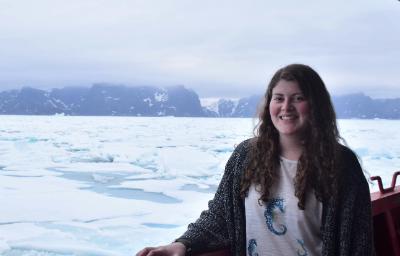
I’m from London, Ontario, which isn’t too far from Lakes Erie and Huron, so I’ve always had much love for the Great Lakes in Canada. But as I grew up, I also became curious about Canada’s coastal waters, which lead me to venture off to the East Coast, where I studied marine biology at Dalhousie University. During my time in Nova Scotia, I realized I was passionate about life in the ocean and that I wanted to keep studying it, so after finishing my undergrad I decided to pursue a master's at Memorial. I now live here in Newfoundland & Labrador, where I am happily studying the deep-sea creatures of the Labrador Sea!
Project title: Trophic ecology of the Labrador Sea: combining stable isotope and metabarcoding approaches to construct deep-sea food webs
Project description: The deep-sea makes up most of our oceans, and yet it remains virtually unexplored. The Labrador Sea is no exception, as the ecology of its depths is mostly a mystery. Since the deep-sea can be largely inaccessible, indirect methods to study its ecology are often used, including the analysis of stable isotopes from animal samples or the sequencing of environmental DNA from water samples. Neither approach is perfect on its own, but they appear to be complementary when used together. The goal of my research is to use these approaches to examine marine food webs of the Labrador Sea and explore their combined potential to investigate the trophic ecology of deep-sea habitats. Through this research, I’m hoping to add to our knowledge of the Labrador Sea and to expand our understanding of benthic and pelagic ecosystem dynamics in a globally significant downwelling area.
Contact: asmcallister@mun.ca
Guzal Riskulova 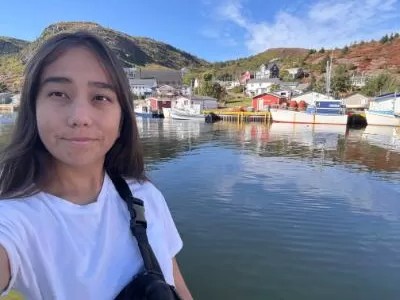
Growing up in Montreal, I was always passionate about marine biology, a spark ignited by the many marine movies and documentaries I watched as a kid. I developed a very keen interest for the deep sea during my teenage years which has led me to complete my BSc (Honours) in Water Environments & Ecosystems, specializing in biology, at McGill University. I've always wanted to move to the coast, which was confirmed by my field course at the Huntsman Marine Science Center in Saint Andrews, NB, and also explains why I'm now happily studying the process of carbon transformation at the bottom of the sea floor for my marine biology Master's degree at Memorial University. I couldn't be any happier in St. John's, and I'm looking forward to all the new experiences and knowledge yet to be acquired here in Newfoundland & Labrador.
Project title: come back soon!
Contact: griskulova@mun.ca
Pauline Rollat 
Growing up in Sète, France, my backyard was the Mediterranean Sea. For as long as I can remember, I always had my feet in the water and would spend hours at the beach chasing hermit crabs and collecting shells. I later moved to Canada, where my new water playground became the St. Lawrence River and the Atlantic Ocean. I completed my undergrad in Environmental Biology at McGill University, but my curiosity for the ocean never faded. A summer course in New Brunswick on marine mammals convinced me to take a leap and pursue a master's in Marine Biology at Memorial University. When I'm not studying or working, I'm likely hiking one of the many beautiful coastal trails around St. John's, crocheting, or reading!
Project title: Carbon Reduction via Algal Deposition on the Ocean Floor
Project description: Climate change concerns have catalyzed growing interest in large-scale projects to cultivate seaweeds and sink them to the deep ocean as a sustainable strategy for greenhouse gas reduction. While macroalgae may offer a considerable carbon sink, the effects of depositing large volumes of kelp on deep-sea ecosystems remain poorly understood. My project will investigate how algal deposition influences both carbon cycling and benthic communities on Canada’s east coast, using a combination of in-situ incubations, controlled lab experiments, and species interaction analyses. The results will provide critical insights into ecosystem responses, resilience, and carbon dynamics, as well as informing responsible carbon reduction initiatives.
Contact: prollat@mun.ca
Krista Strader 
I grew up along the St. Lawrence River with regular access to the water and the amazing animals that reside inside. I studied at Carleton University, only an hour from home, where I strengthened my love for research and obtained my BSc in Biology. From a young age I was passionate about marine biology and had always wanted to see the ocean. In my final year at Carleton, I participated in a Marine biology field course where I was able to see the Atlantic Ocean for the first time. This solidified the desire to pursue marine biology which led me to study here in St. John’s where I look forward to learning more and broadening my horizons.
Project title: come back soon!
Contact: kstrader@mun.ca
Lab Alumni
Graduate Student Supervision:
completed 2025 Stephan Hamisch M.Sc. Advisor
completed 2025 Natalie Perrin M.Sc. Co-advisor
completed 2025 Rebecca Evans M.Sc. Co-advisor
completed 2025 Catie Young M.Env.Sci. Co-advisor
completed 2024 Alessia Ciraolo Ph.D. Advisor
completed 2022 Emilie Geissinger M.Sc. Co-advisor
completed 2022 Ty Colvin M.Sc. Advisor
completed 2020 Evelyn MacRobert M.Sc. Co-advisor
completed 2018 Neus Campanya i Llovet Ph.D Co-advisor
completed 2018 Emma Cooke M.Sc. Co-advisor
completed 2016 Mallory Van Wyngaarden M.Sc. Co-advisor
completed 2016 Renald Belley Ph.D. Advisor
completed 2016 Ryan Stanley Ph.D Advisor
completed 2016 Melanie Rossong Ph.D. Co-advisor
completed 2015 Dustin Schornagel MSc Co-advisor
completed 2015 Ashley Robar M.Sc. Co-advisor
completed 2013 Melanie Shapiera M.Sc. Co-advisor
completed 2013 Krista Baker Ph.D., Part time Co-advisor
completed 2013 Corey Morris Ph.D., Part time Advisor
completed 2011 Louise Copeman PhD Co-supervisor
completed 2010 Victoria Burdett-Coutts M.Sc. Co-advisor
completed 2009 Mary Ryan M.Sc. Co-advisor
completed 2009 Ryan Stanley M.Sc. Co-advisor
completed 2009 Ashlee Lillis M.Sc. Advisor
completed 2009 Kelly Carter M.Sc. Co-advisor
completed 2009 Michael Kelly M.Sc. Advisor
completed 2007 Lu Guan M.Sc Advisor
completed 2006 Jared Crawford Master’s of Marine Studies Advisor
completed 2004 Pedro Quijon Ph.D. Advisor
completed 2003 Harshana Rajakaruna M.Sc Co-advisor
completed 2002 Danielle Nichols Master's of Marine Studies Advisor
completed 2001 Andrea Carew Master's of Marine Studies Co-advisor
completed 2001 Barry McCallum Master's of Marine Studies Advisor
completed 2001 Patricia Ramey M.Sc. Advisor
completed 2000 Ian Bradbury M.Sc. Advisor
completed 1999 Gina Billard Master's of Marine Studies Advisor
Postdoctoral Investigator Supervision:
2016-2018Nicolas Le Corre Co-supervisor
2016-2017 Barbara Neves Co-supervisor
2016 - 2018 Nicolas LeCorre Co-supervisor
2013 – 2015 Richard Allen Co-supervisor
2011 – 2014 Chih-Lin Wei Co-supervisor
2010-2011 Colleen Mercer-Clark Co-supervisor
2007-2008 I. Bradbury Co-supervisor
2004-2005 K. Alexandra Curtis Co-supervisor
Honours Student Supervision:
Completed 2017 Chelsea Bloom
Completed 2011 Victoria Howse
Completed 2009 Rebecca Doyle
Completed 2008 Larina Carroll (Co-supervised) Krista Boland
Completed 2007 Margaret Warren (Co-supervised) Candice St. Germain Karla Short
Completed 2006 Stephen Cole Stephen Chung Kate Gardiner
Completed 2002 Kelly Carter (Co-supervised)
Completed 2001 Krista Park
Completed 1999 Jonathon Martin Thomas Brown