Under the influence
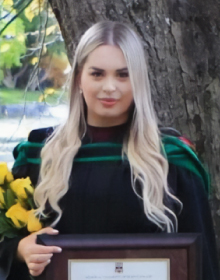
Kathryn Dalton studies how alcohol, nicotine and other substances affect adolescent development while partnering with young people and educators to strengthen prevention and harm reduction programs and guide meaningful change.
Where are you from?
I’m from St. John’s, Newfoundland and Labrador. I moved to Ottawa, Ontario, for my undergraduate degree, then moved back home for my Master of Science degree. Most recently, I worked in youth mental health research at McGill University in Montreal, Quebec. I’ve since returned home and am happy to be back at Memorial University, where I’m currently pursuing my PhD.
What do you enjoy doing for fun?
For fun, I enjoy spending time with friends and family and exploring new coffee shops or restaurants. I’m also passionate about health and wellness, and finding ways to ensure a healthy work-life balance outside of my academic work is really important to me.
Why did you decide to pursue a graduate degree?
I first decided to pursue a graduate degree because I’ve always been passionate about learning and using research to make a difference in people’s lives. My Master of Science degree focused on treatment options for young adults with substance use disorder. During my master’s research, I recognized the crucial role of harm reduction and primary and secondary prevention. This inspired me to want to make an even greater impact and pursue a PhD, which provides the opportunity to build on my MSc work, collaborate with healthcare professionals, and conduct research that improves health outcomes – especially for youth facing complex social and health challenges related to substance use. Through this work, I aim to help inform interventions and policies that can create meaningful, positive change.
Why did you choose Memorial University for your graduate studies?
I had a great experience at Memorial University during my master’s degree, so returning here for my PhD felt like the best fit for me because it allows me to build on my previous MSc work and be closer to family and friends. I was also drawn to Memorial for the opportunity to work with Dr. Lisa Bishop and Dr. Jennifer Donnan, who are conducting innovative and impactful research in youth substance use. They are the co-founders of Drug Education Centred on Youth Decision Empowerment (DECYDE), which is an education strategy that provides evidence-based, trauma-informed, substance use education and resources with a focus on prevention and harm reduction for youth, educators, and guardians. Their research aligns closely with my passion for supporting youth and advancing harm reduction, and this collaboration has provided a meaningful opportunity for me to develop as a researcher and contribute to work that makes a real difference.
What is your research/thesis about? How do you describe your research to a general audience with no background in the field?
In my Master of Science degree, I examined treatment options for young adults with substance use disorder. Through this research, I recognized the crucial role of harm reduction and primary and secondary prevention. I also learned that youth in Newfoundland and Labrador experience the highest rates of vaping and binge drinking in all of Canada. My PhD research, in partnership with the DECYDE team, aims to better understand youth substance use through the lens of the Biopsychosocial Model of Addiction. This model considers how biological, psychological, and social factors interact to influence substance use.
Biological factors include family history (genetics), brain development and neurobiology, and biological sex. Psychological factors include mental health issues such as anxiety or depression, as well as cognitive and personality traits. Social factors involve relationships with friends and family, socioeconomic status, neighbourhoods, social supports, and access to education.
By studying how these factors interact in young people, my PhD aims to develop better ways to prevent substance use problems and reduce harm when/if substance use does occur. To do this, I plan to conduct a scoping review of existing research, survey junior high and high school students, and interview teachers. This work would not be possible without the valuable insights of youth. As co-chair of the DECYDE Youth Advisory Panel, I collaborate directly with young people who help shape the direction of my research to ensure it reflects their lived experiences, priorities, and needs.
The goal of my PhD research is to provide valuable insights for clinicians, educators, and policymakers so they can create targeted education programs, caregiver and social support systems, and primary prevention and harm reduction strategies.
Ultimately, by supporting youth, promoting harm reduction, and encouraging safe health behaviours, I am proud to be part of a team that helps youth develop key skills such as safer decision-making, healthier relationships, improved academic performance, and a reduced risk of substance use disorders, which will empower youth to build a stronger foundation for their future well-being.
How would you describe your experience as a graduate student at Memorial?
Being a graduate student at Memorial has been a really positive experience for me. I feel very fortunate to have received graduate funding from NL SUPPORT/Quality of Care NL. In addition, I’ve been especially lucky to work with supervisors who are not only experts in their fields but are also genuinely committed to my development as a researcher and professional. This supportive environment has helped me grow both academically and personally throughout my graduate degree.
What scholarships or awards have you received?
I am very grateful and honoured to have received awards and funding throughout my graduate studies. These include the NL SUPPORT / Quality of Care NL Graduate Fellowship, the MUN School of Pharmacy Millennium Graduate Fellowship, the Dr. Mohsen Daneshtalab Graduate Research Poster Award, and the Memorial University School of Pharmacy Travel Award. Each of these awards has been a meaningful source of support and encouragement throughout my graduate journey.
What career path are you interested in pursuing after graduation?
After graduation, I aim to pursue a career in research and academia focused on youth substance use, particularly in harm reduction and substance use disorder treatment. My goal is to contribute to advancing knowledge that improves outcomes and quality of life for young people affected by substance use challenges. Through my work, I hope to inform better policies and interventions that support youth on their path to healthier futures.
What advice would you give to current or future graduate students?
My advice to current and future graduate students is to choose a research topic you’re truly passionate about, as you’ll be dedicating several years to it and having a genuine interest makes the work much more meaningful and rewarding. It’s also important to develop strong skills in working independently, staying organized, and being accountable for deadlines to keep your progress on track. I also encourage students to take advantage of opportunities such as presenting at local and national conferences, attending webinars, and engaging in networking and collaboration events. Additionally, don’t hesitate to seek support from your supervisors, peers, or university resources when needed. And most importantly, prioritize balance and wellness as this is essential for managing stress, enjoying graduate school, and preventing burnout.
Anything else you would like to share?
I’m always happy to connect with anyone interested in my research or who has questions about pursuing a PhD! Feel free to visit my ResearchGate profile (https://www.researchgate.net/profile/Kathryn-Dalton-2) or email me at kdalton@mun.ca.
Become a graduate student at Memorial. Apply online today!