Seeing the big picture
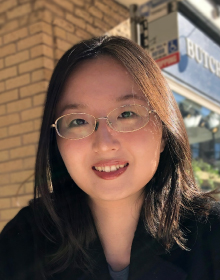
Chengjun Yue studies harmonic analysis and image decomposition to reveal hidden structures in complex data, while embracing the broader perspective of learning, discovery and exploration in both research and life.
Where are you from?
I was born and raised in Jining, Shandong, China, and I moved to St. John’s in 2021 to pursue my PhD.
What do you like about Newfoundland and Labrador?
Newfoundland is a good place for fishing.
What do you enjoy doing for fun?
I particularly enjoy hiking and fishing, activities that Newfoundland’s natural beauty makes especially rewarding during the summer months.
Why did you decide to pursue a graduate degree?
My curiosity about academia led me to pursue a master’s degree at Renmin University of China, where I discovered the joy of research and the fulfillment that comes from contributing new knowledge. That experience inspired me to continue my journey and ultimately pursue a PhD at Memorial University.
Why did you choose Memorial University for your graduate studies?
I chose Memorial University to further my studies and conduct research in harmonic analysis. While exploring PhD programs, I found that my research interests closely aligned with those of Prof. Jie Xiao, which ultimately led me here.
What was your research/thesis about? How do you describe your research to a general audience with no background in the field?
My research focused on harmonic analysis and its applications in image processing. More specifically, I studied fractional operators such as the fractional Laplacian and the Riesz potential and developed new mathematical models using these tools. The goal was to perform image decomposition, which means breaking an image down into different components to better analyze and process it.
How would you describe your experience as a graduate student at Memorial?
Overall, I am very satisfied with my experience at Memorial. I was given the fellowship, which helped me avoid financial pressure, and I also received travel funding to attend academic conferences. Beyond academic training, the university and student associations offered a variety of activities and resources, such as job fairs, career panels, coffee chats, English learning support, and outdoor events.
What are you doing now after having graduated with your PhD?
I am currently a postdoctoral fellow at Université Laval.
How did your graduate program help prepare you for your current job?
For a career in academia, publications and teaching experience are essential. Through my supervisor and the program, I received strong academic training. As PhD students, we were assigned teaching assistant roles each semester, which gave me weekly tutorial experience. In addition, senior PhD students had the opportunity to apply to teach a course as the instructor.
How did Memorial help to get you where you are today?
Thanks to the travel funding provided by the university, I was able to attend the Canadian Mathematical Society meeting. In addition, Memorial hosted annual academic conferences where I had the opportunity to give oral presentations that enriched my CV. I also participated in organizing a conference, which gave me valuable experience with the process. There were also on-campus job fairs and updates about potential job opportunities via email.
What advice do you have for current and/or future graduate students?
A PhD is a unique journey where you can fully immerse yourself in academic training and research without too many outside distractions. Cherish this time! Communicate regularly with your supervisor and take advantage of the many opportunities available through the university and within your research community, including seminars, conferences, summer schools, and internships. Remember that research does not always go as planned. Do not be discouraged when setbacks happen, as they are part of the process. And finally, make time to explore Newfoundland in your spare time. It is a beautiful place. Enjoy your journey here!
Become a graduate student at Memorial. Apply online today!