Sound decisions
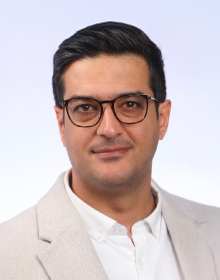
Seyed Mohammad Reza Mousavi’s decision to study at Memorial set the stage for his work in ocean acoustics, including the development of a compact sonar system.
Where are you from?
I’m from Shiraz, a historic city in the center of Iran known for its poets, gardens, and hospitality. People from Shiraz are known for being open, expressive, and easy to connect with, qualities I’ve carried with me in my academic and professional life. When I moved to St. John’s, I immediately appreciated how friendly and welcoming the people are here too. Newfoundlanders love to talk, share stories, and help. That sense of community, combined with the incredible natural beauty, rugged coastlines, endless hiking trails, and the closeness to the ocean, makes St. John’s feel like a second home.
What do you enjoy doing for fun?
I really enjoy staying active and connecting with nature. During the winter months, I usually spend time at the gym and go swimming regularly, it helps me clear my head and stay healthy during the darker season. But once the summer arrives, I try to spend as much time outdoors as possible. I love hiking, exploring new trails, sightseeing, and camping whenever I get the chance. The ocean is a big part of my life here, I find peace just sitting by the water.
Why did you decide to pursue a graduate degree?
Ever since I was involved in my first acoustic system design project, I’ve been drawn to the kind of challenges that require a deep understanding of both theory and practical implementation. I’ve always been curious, always asking “why?” and “how can we make this better?” Working on high-tech projects made it clear to me that research and innovation are what truly excite me. I don’t feel satisfied just applying existing tools, I want to push boundaries and develop something new. Pursuing a graduate degree was the natural path to achieve that.
Why did you choose Memorial University for your graduate studies?
When I started looking into graduate programs, I was specifically searching for institutions with strong expertise in ocean acoustics. Memorial stood out immediately, not only because of its academic reputation but also because of its location and its close ties to the ocean industries. The faculty here are active researchers with a lot of hands-on experience. What really impressed me was how the university connects academic research with practical fieldwork and industry needs, especially through initiatives like the Marine. That combination of scientific depth and applied focus made Memorial the best choice for what I wanted.
What is your research/thesis about? How do you describe your research to a general audience with no background in the field?
My research is focused on developing a compact sonar system that can measure how the speed of sound changes with depth in the ocean, something that’s very important for navigation, underwater communications, and offshore operations. Traditionally, measuring this requires lowering instruments into the water, which can be time-consuming and impractical in many situations. Instead, we’re developing a technique that uses acoustic pulses, like an underwater “ping”, and analyzes how the echoes return to estimate the sound speed profile.
How would you describe your experience as a graduate student at Memorial?
My experience as a graduate student at Memorial has been both challenging and deeply fulfilling. I’ve had the opportunity to work on cutting-edge research while also learning how to build and test real systems. I appreciate the trust and independence I’ve been given; my supervisor supports me in exploring ideas but also gives me the freedom to try new approaches. Beyond research, Memorial has given me the chance to connect with people from different disciplines and cultures, and to engage in programs like Lab2Market, which really expanded my view of what research can become.
What scholarships or awards have you received?
I’ve been fortunate to receive several awards that recognize both academic and entrepreneurial achievement. In 2024, I was selected for the Ocean Startup Challenge Award and received the Chevron Canada Limited Rising Star Award. I was also awarded the Gordon Mertz Memorial Fellowship in Physical Oceanography (2023) and the Royal Bank Fellowship in Marine Studies (2021). In addition, I was accepted into Lab2Market Validate and Lab2Market Launch, two highly competitive national programs designed to help researchers commercialize their work and connect with real-world users.
Have you faced any challenges in life that you’ve overcome to pursue graduate studies?
Yes, moving to a new country, adjusting to a different culture, and navigating everything from immigration paperwork to winter weather has been a journey. On top of that, pursuing an interdisciplinary research project that includes hardware design, acoustic modeling, field testing, and even commercialization is a huge challenge. But I’ve always believed that growth happens outside your comfort zone. I’ve learned how to be resourceful, how to ask for help, and how to keep going even when things are uncertain.
What career path are you interested in pursuing after graduation?
After graduation, I plan to launch my own startup, Atlantic Echo Solutions, to bring this acoustic profiling technology to market. I want to build tools that can be used by oceanographers, offshore operators, and environmental researchers, tools that make it easier to understand and work with the ocean. Starting a company allows me to continue innovating, stay close to the technical work I love, and make a real-world impact.
What advice would you give to current or future graduate students?
Give it your best, but don’t forget to enjoy the journey. Explore your curiosity, celebrate small wins, and build relationships with people around you.
Become a graduate student at Memorial. Apply online today!