A conscious decision
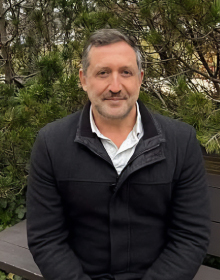
Martin Poole chose to pursue a research question that challenges how we understand awareness, investigating whether plants have a form of consciousness of their own.
Where are you from?
I am from Ramea, an island in an archipelago off the south coast of Newfoundland.
What do you like about St. John’s or Newfoundland and Labrador?
I enjoy many things about NL, including the talented people and the art. I also like that I have everything a city offers, with nature right at its doorstep.
What do you enjoy doing for fun?
I like to play classical and flamenco guitar when I’m not with my trivia team or getting a pint with friends.
Why did you decide to pursue a graduate degree, and why did you choose Memorial?
I decided to pursue a PhD because my topic, which seeks to understand plant consciousness, is very dear to me, and I wanted to see it through. I chose MUN because Newfoundland is my home. It is a lively campus with fresh thinking and strong support for interdisciplinary students.
How would you describe your graduate student experience at Memorial?
I completed my Master’s degree at MUN, and it was a memorable experience. The program was rewarding for someone who enjoys independent study and a supportive structure. I was thrilled to be selected as a department fellow in the Faculty of Humanities and Social Sciences and to receive the Stuart O. Pierson Prize. Now, in my PhD, I am working with supervisors in Philosophy, Biology, and Psychology, and I enjoy seeing my topic from all three perspectives.
Can you tell us a little about your research?
I grew up in the woods and on the ocean, and I have always wondered whether nature possesses more awareness than we give it credit for. My research asks whether plants have a form of consciousness and what that would mean for our theories of consciousness. I bring philosophy together with the science of how plants sense and respond to their world. We tend to judge other lifeforms by how closely they resemble us, and I want to look at them through the lens of their own abilities. That has ethical implications too, including how we treat our forests.
What industry or career path are you interested in pursuing after graduation?
After I graduate, I would like to teach and continue my research. I want to share my love of learning with others and keep advancing the study of plant consciousness into areas that haven’t been explored yet.
Do you have any advice for current or future graduate students?
Make sure your research topic is one you care about. Grad school involves a lot of seeking others’ approval, and it’s easy to lose sight of why you started.
Anything else you would like to share?
I would like to thank my supervisors and everyone at Memorial who has supported this project. If anyone is curious about plant consciousness, I am always happy to discuss it.
Become a graduate student at Memorial. Apply online today!