
Archiving the everyday
When Violetta Halpert came to Memorial University in 1962, her arrival couldn’t have been more fortuitous.
This was a time when Newfoundland and Labrador was undergoing significant social transformation.
Traditional outport life, with its rich repertoire of music, vernacular, stories and beliefs, was changing rapidly. And with the pressures of resettlement and economic modernization came a fear of cultural loss.
As a folklorist, Ms. Halpert would become a passionate advocate for the cultures of this province, and her work would ensure that the voices of everyday people were not lost in the rush toward modernization but, instead, were recognized as foundational to the province’s identity.
Born in Pennsylvania in 1919, Ms. Halpert earned her BA at Wilson College and an MA in folk literature at Indiana University, where she studied under some of the foremost figures in the field.
It was at Indiana that she met her husband, Dr. Herbert Halpert, himself a leading folklorist, with whom she would share both a personal and professional life dedicated to cultural preservation.
Both had been trained to value the stories and expressions of ordinary people. And in the mid-twentieth century, this material was only just beginning to be seen as deserving of rigorous academic study.
When the Halperts arrived in Newfoundland and Labrador, they recognized the urgent need to document these traditions. Together, they helped establish Memorial’s Department of Folklore and, in 1968, the Memorial University of Newfoundland Folklore and Language Archive (MUNFLA) — one of the earliest and most ambitious initiatives of its kind in Canada.
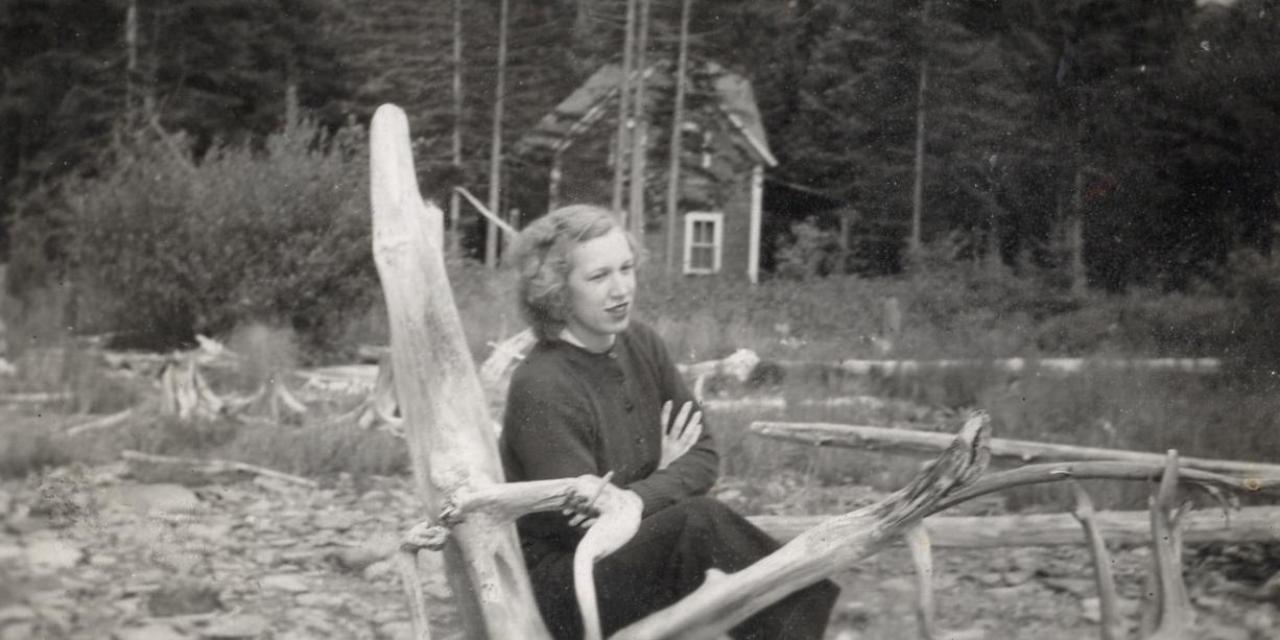
Violetta Halpert arrived in Newfoundland and Labrador in 1962 and was instrumental in the development of the Memorial University of Newfoundland Folklore and Language Archive (MUNFLA). Photo courtesy of the Halpert Estate.
MUNFLA was created to collect, preserve and make accessible the oral histories, songs, narratives, customs and everyday cultural expressions of Newfoundland and Labrador.
From its earliest days, its holdings grew into a repository of tens of thousands of field recordings, photographs, manuscripts and student research papers. Today, the archive is recognized as one of the largest folklore archives in North America, containing rich material that serves both scholars and the wider community.
Ms. Halpert’s role in developing the archive was substantial. While her husband often took a more public scholarly role, she worked behind the scenes as a researcher, librarian and organizer. She built from scratch the infrastructure that makes MUNFLA a working archive.
She served in the Acquisitions Department of Memorial’s Queen Elizabeth II Library, where she focused on acquiring books and material to develop the folklore collection.
At MUNFLA, she compiled and organized student manuscripts for researchers and created finding tools to make this material usable.
She also helped devise a comprehensive classification system for folklore genres. This work was essential to organizing the untold volumes of collected material and would come to influence both how folklore was taught at the university and how it was catalogued in the archive.
Her own research interests — particularly in folk belief and vernacular culture — enriched the archive’s holdings and shaped the intellectual contours of the department.
She was not only a collector but a teacher and mentor. Her early folklore publications underscored her deep engagement with the discipline. And her efforts helped establish Memorial as a global destination for students and researchers of folklore, oral history and traditional knowledge.
Ms. Halpert died in 2009, but the legacy of her work continues in the archive’s ongoing use by students, scholars, artists and community members. She also established the Herbert and Violetta Halpert Travel Research Award, which supports graduate students engaged in research using the MUNFLA collections.
As one of Memorial’s true gems, MUNFLA remains open to the public, supporting academic research and personal research into family histories, cultural heritage and creative projects. It stands as an inexhaustible resource for understanding the province’s past and present.
The archive she helped build is rich with voices from diverse communities and stands as a testament to her belief that folklore is more than mere entertainment. It is a living record of how people understand themselves and the world they live in.
In this way, her contribution to Memorial is both scholarly and deeply human. Hers is a legacy of listening, preserving and connecting generations through the stories and songs that define who we are.
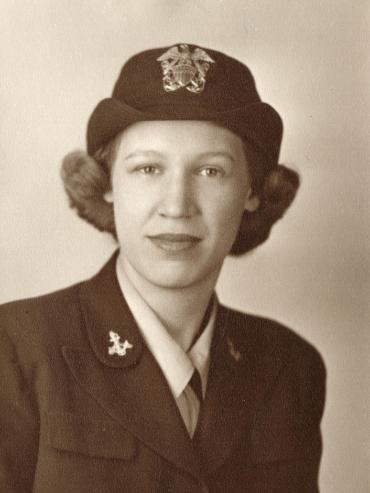
In 1941, Violetta Halpert became one of the first women to enlist in the U.S. Navy. She rose to the rank of lieutenant and, after WWII, continued in the U.S. Navy Reserves until her honourable discharge in 1951. Photo courtesy of the Halpert Estate.