
The cornerstone
Dr. Vincent Partrick Burke was driven by a simple but demanding idea. He believed that higher education should serve the people who need it most.
In the early 20th-century, that belief helped bring Memorial University College (MUC) into existence. And Dr. Burke was not only a founder of the college but one of its most committed builders, shaping its academic direction and public purpose at a time when access to higher education was limited and uncertain.
He was born in 1878 in St. Jacques, Newfoundland, and educated in St. John’s at St. Bonaventure’s College and at Columbia University in New York.
At just 19 years old, he became principal of the high school in Torbay, and by the age of 21 he was appointed superintendent of Roman Catholic Schools in Newfoundland, an enormous responsibility for someone so young.
But this early leadership experience combined with his infectious exuberance would lay the groundwork for his later influence on educational policy.
In 1920, he was appointed deputy minister of education for the Dominion of Newfoundland, a role in which he pushed for stronger teacher training and helped lay structural foundations for post-secondary education in the dominion.
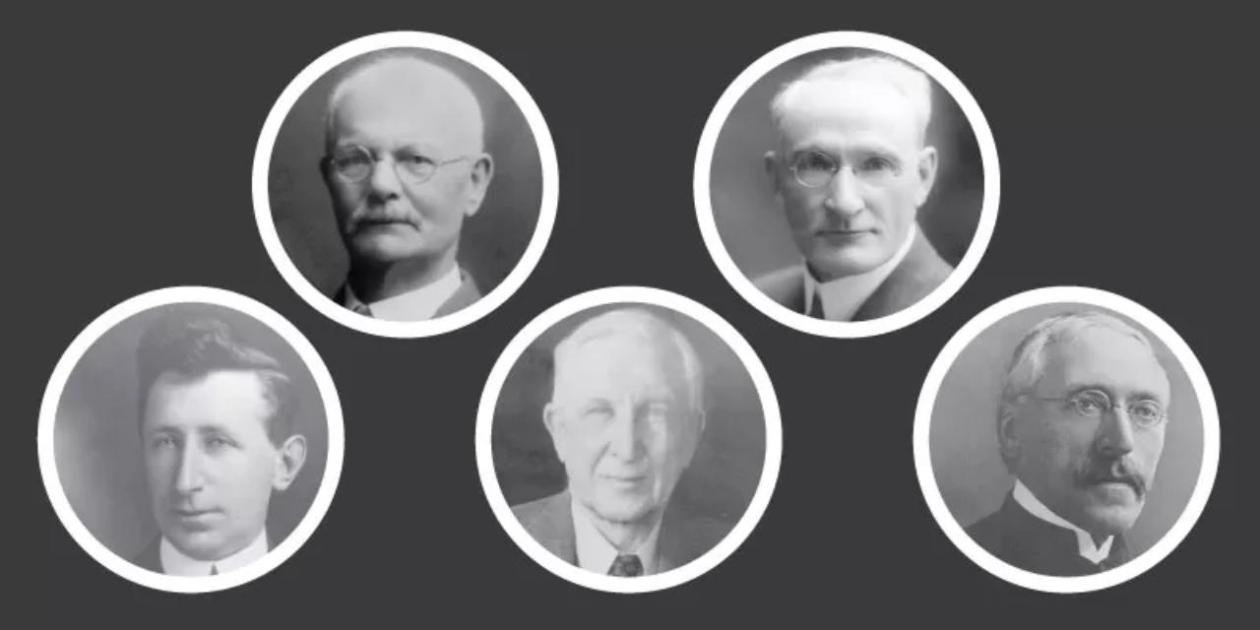
The founding trustees of Memorial University College, from left: Ronald Kennedy, William Blackall, Vincent Burke, Arthur Barnes and Levi Curtis. Photographs from Memorial University Archives.
Together, Dr. Burke, Dr. William Blackall and Dr. Levi Curtis, referred to themselves as the “Three Musketeers,” and they were the prime movers whose combined efforts would eventually lead to the creation of MUC in 1925.
It was their idea to found the college as a living memorial to Newfoundlanders and Labradorians lost in the First World War.
Dr. Curtis contributed essential administrative strength. Dr. Blackall worked to shape the institution’s academic standards. And Dr. Burke took on a leadership role notable for its consistency and clarity of vision.
These three founders had begun working tirelessly toward their dream of post-secondary education in Newfoundland in 1913. But by 1924, there remained no funding to support a university college in St. John’s.
Then, in October of that year, Dr. Burke travelled to Dalhousie University to attend a meeting of the Carnegie Corporation of America’s Advisory Committee. Following that meeting, the Carnegie Corporation donated $15,000 annually, for five years, to establish a junior college in St. John’s.
This was arguably Dr. Burke’s greatest single victory. And without this initial contribution, MUC may have never been established.
In a letter to John Lewis Paton, Dr. Blackall once wrote, “Burke is our dux.” The Latin word dux means “leader.”
Sixty years later, the late Dr. Malcolm Macleod, the foremost historian on the history of MUC, wrote, “More than any other individual, Burke is father of the university.”
In the decades following the founding of MUC, Dr. Burke remained deeply involved in the college’s evolution. He chaired the first Board of Governors at its establishment and later served as chairman of the board from 1936 to 1951.
For his contributions to education and public life, he was appointed to the Order of the British Empire, and the Vatican recognised his service with a papal knighthood. In 1950, he was appointed to the Canadian Senate and represented Newfoundland and Labrador until his death in 1953.
What set Dr. Burke apart was his long view. He understood that institutions are built slowly. For him, MUC was a foundation upon which Newfoundland could build its own intellectual and professional life. That belief would prove prescient as the college later evolved into Memorial University.
Today, the scale of our university would have been unimaginable in Dr. Burke’s time. Yet the principles he championed remain with us. He believed in making education accessible to all and in answering to the needs of the community.
His vision would ultimately lead to a university rooted in service, shaped by place and dedicated to the people of Newfoundland and Labrador.
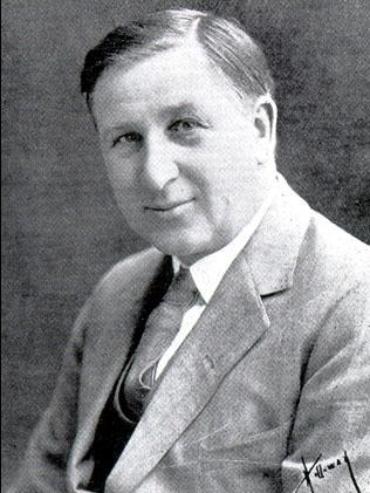
Vincent Patrick Burke. Photo by Holloway from Who’s Who in and from Newfoundland 1937.