Please Enter a Search Term

Introduction

A Master of Music for the 21st Century

The Master of Music programs in performance, performance/pedagogy and conducting directly address the variety of career and life skills which the contemporary musician must possess. Intensive performance studies are complemented with a range of other learning and experiential opportunities that address the roles that make up the profession today, including teacher, small-business person, and community cultural advocate. These programs are also conceived in recognition of the fact that no two musicians will require exactly the same complement of professional skills. Thus the program permits considerable flexibility within a common structure.

Each specialization in the program contains the following components:

  • Performance/conducting study and experience
  • Music research and critical thinking skills
  • Career and complementary professional skills
  • Electives

Performance/conducting experience

Across the range of performance and conducting options, the objective of this element of the program is the same: the acquisition of professional-level skill. There is considerable flexibility in defining the performance medium.

Conducting majors have the option of working principally with instrumental ensembles, principally with vocal ensembles, or a balanced combination of both. Our conducting majors get regular podium time with the School’s choirs and instrumental ensembles, as well as access to the unique resources of the musical community in St. John’s, affording a wide range of conducting opportunities.

Performance and performance/pedagogy concentrations are available in most orchestral instruments, guitar, keyboard and voice, with the option of a secondary performance specialization where appropriate and feasible. Students are mentored in the preparation of two public concerts of professional calibre; they also have the option of preparing a professional audio recording – the basic calling card of musicians today. In addition, a variety of chamber music experiences are available for credit.

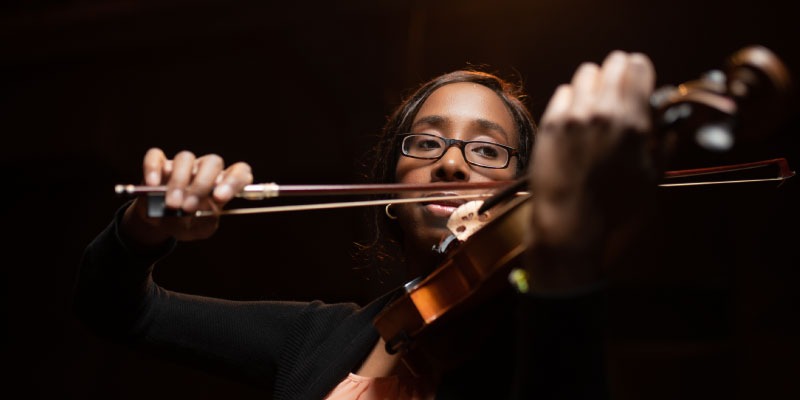
The Suncor Energy String Fellowship program (www.mun.ca/nsosuncorstrings/), offers a unique career development opportunity for string players. In 2013-14, two violinists, a violist and a cellist in the MMus program will be awarded two-year Suncor Energy String Fellowships each worth $12,000 per year. These four string players perform with the Newfoundland Symphony Orchestra, and mentor young string students through chamber music performances and teaching, gaining valuable professional experience while completing their MMus degree.

Music research and critical thinking skills

Research and critical thinking skills are the foundation of any graduate program, Master of Music programs not excepted. This two-semester sequence contains one semester of research methods followed by a seminar course exploring music in its social context. The seminar challenges students to expand their musical horizons beyond concerns with practice alone.

Career skills and complementary professional skills

This component of the program addresses the role of the versatile professional in today’s world. The required course in career skills introduces students to a wide range of careers and industry professionals, deals with practical issues such as taxes and media, and helps students develop the skills needed for career development and promotion. Internship placements in the music industry, in teaching studios or in professional organizations offer hands-on applications of theory, and students can propose and carry out community music-making projects for credit. Additional complementary courses include pedagogy, ensemble repertoire and score study and analysis.

Electives

All majors include 3 to 6 credit hours of electives, allowing students to focus on areas of particular interest. In some cases, courses from related disciplines may be included.

Share