Nonfiction Book Group
Selections: 2011 - 2012 | Other Recommendations: 2011 - 2012| Books Read: 2010 - 2011
|
The Nonfiction Book Group meets:
What do we read? We started up in 2003; here is a list of books we have read. For more information and to be put on our mailing list, please e-mail our convenor, Deborah Rehner. Our final meeting for the year is June 5, 2012, when we meet to:
|
![]() Don't forget your donation to the Campus Food Bank! |
The books recommended for 2012-2013 are:
|
Legend:
|
All books, except as noted, are available:
|
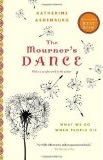
Katherine Ashenberg, The Mourner’s Dance
It's likely that for years to come, the recently bereaved will feel enormous gratitude to Katherine Ashenburg and her breathtakingly beautiful, staggeringly researched book, The Mourner's Dance. Yet that may not have been Ashenburg's chief intent. Her involving and admirably unsentimental study of mourning rituals was an act of catharsis, both of her own grief over the death of her would-be son-in-law, Scott Roche, and that of her daughter Hannah, the would-be bride. Roche's tragic accidental death is an obvious launch point for Ashenburg's investigation, but it's amazing just how far she took her research. What Ashenburg learns--and what is ultimately impressed upon the reader--is that grief is as complex as the person any of us grieves for. QEII, NLPL (352pp)
Katherine Boo, Behind the Beautiful Forevers
Annawadi is a makeshift settlement in the shadow of luxury hotels near the Mumbai airport, and as India starts to prosper, Annawadians are electric with hope. As the tenderest individual hopes intersect with the greatest global truths, the true contours of a competitive age are revealed. And so, too, are the imaginations and courage of the people of Annawadi. Behind the Beautiful Forevers carries the reader headlong into one of the twenty-first century’s hidden worlds, and into the lives of people impossible to forget. as complex as the person any of us grieves for. (288pp) NLPL, (Hd $21, no indication that pb is coming out), eLib
Steve Burgess, Who Killed Mom?
One of Canada's funniest writers, Steve Burgess tackles his mother's life and death in a profound, entertaining story. Memoir, biography, and outrageous comedy make for a perfect blend. Telling the tale of his mother's life and death, and along the way laying bare his own struggles as a troubled teenager, Burgess delivers a moving meditation on life and family. (224pp)
Rose George, The Big Necessity: the unmentionable world of human waste and why it matters
Bodily waste is something common to all and as natural as breathing, yet we prefer not to talk about it. But we should—even those of us who take care of our business in pristine, sanitary conditions. Moving from the deep underground sewers of Paris, London, and New York, to an Indian slum where ten toilets are shared by 60,000 people, Rose George stops along the way to explore the potential saviors. With razor-sharp wit and crusading urgency, Rose George has turned the subject we like to avoid into a cause with the most serious of consequences. QEII, NLPL (324pp)
Ioan Grillo, El Narco
El Narco draws the first definitive portrait of Mexico's drug cartels and how they have radically transformed in the last decade. El Narco is not a gang; it is a movement and an industry drawing in hundreds of thousands from bullet-ridden barrios to marijuana-growing mountains. And it has created paramilitary death squads with tens of thousands of men-at-arms from Guatemala to the Texas border. Journalist Ioan Grillo has spent a decade in Mexico reporting on the drug wars from the front lines. This piercing book joins testimonies from inside the cartels with firsthand dispatches and unsparing analysis. NLPL, E (pb to be released Nov. 2012, 336pp)
Margaret Humphreys, Oranges and Sunshine (aka, Empty Cradles)
Our member says: This book was recommended for the other book groups last year. It was originally published as Empty Cradles and was, the title of which is Oranges and Sunshine. The story is amazing. In 1987, Margaret Humphreys investigated and brought to public attention the British government program of Home Children, which involved forcibly relocating poor British children to Australia, Canada, New Zealand, and other parts of the Commonwealth, often without their parents’ knowledge. Children were often told their parents had died, and parents were told their children had been placed for adoption elsewhere in the UK. In Empty Cradles, Humphreys describes how she learned about the program and her efforts to bring the people who were relocated back together with their birth families.” (384pp)
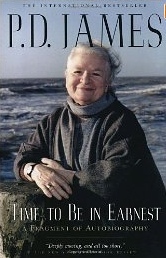
P.D. James, Time to be in Earnest
In 1997, on the eve of her 77th birthday, noted mystery novelist James (A Certain Justice) decided to keep a diary for the first time ever, recording one year in her life. The result is this "fragment of autobiography," a mix of memoir, ruminations on everything from her writing career to Princess Diana's death, and literary criticism. QEII, NLPL (288pp)
Tony Judt, Postwar
World War II may have ended in 1945, but according to historian Tony Judt, the conflict's epilogue lasted for nearly the rest of the century. No one book (even at nearly a thousand pages) could fully encompass this complex period, but Postwar comes close, and is impressive for its scope, synthesis, clarity, and narrative cohesion. Judt treats the entire continent as a whole, providing equal coverage of social changes, economic forces, and cultural shifts in western and eastern Europe. If a moral lesson is to come from World War II, Judt writes, "then it will have to be taught afresh with each passing generation." This book would be an excellent place to start that lesson. QEII, NLPL, eLib (audio) (960pp, ebook: $23)
Daniel Kahneman, Thinking Fast and Slow
The guru to the gurus at last shares his knowledge with the rest of us. Nobel laureate Daniel Kahneman's seminal studies in behavioral psychology, behavioral economics, and happiness studies have influenced numerous other authors, including Steven Pinker and Malcolm Gladwell. In Thinking, Fast and Slow, Kahneman at last offers his own, first book for the general public. It is a lucid and enlightening summary of his life's work. It will change the way you think about thinking.
Our member says: This fascinating book explores the distinction between “fast” thinking (intuitive, often stereotypical, often wrong though effortless) and “slow” thinking (deliberate, reasoned, labour intensive and based on accurate evidence) and how to improve your thinking. It is very entertaining, stuffed with anecdotes and examples: the grown up version of when you were in Grade 3 and a smart aleck kid asked you “Which weighs more, a pound of paper or a pound of lead?” and you answered, “A pound of lead of course!” Learn to recognize the fallacies in your thinking and that of others! QEII, NLPL, eLib (hd 512pp, pb due Oct. 30, 2012)
Mark Kurzem, The Mascot
The subtitle says much about the book: “Unraveling the Mystery of My Jewish Father’s Nazi Boyhood”. It is the story of a Jewish boy from Belarus, how he became the mascot of a group of Latvian SS, and his experiences during the war as a result of that association. On one level it is the memory of a father related to his son some fifty years later; on another, it is the research conducted by the son to see if he confirm what his father told him. As a result the book has much to tell us about the reliability of memory and the problems and methods of historical research.” (432pp)
Steven Levitt & Stephen Dubner, Freakonomics (Rev. ed.)
Economics is not widely considered to be one of the sexier sciences. The annual Nobel Prize winner in that field never receives as much publicity as his or her compatriots in peace, literature, or physics. But if such slights are based on the notion that economics is dull, or that economists are concerned only with finance itself, Steven D. Levitt will change some minds. In Freakonomics (written with Stephen J. Dubner), Levitt argues that many apparent mysteries of everyday life don't need to be so mysterious: They could be illuminated and made even more fascinating by asking the right questions and drawing connections. QEII NLPL (336p)
Penelope Lively, A House Unlocked
Penelope Lively has turned her considerable literary talent to non-fiction with A House Unlocked, recalling the events, customs and people that together paint a slowly shifting picture of English country life in the 20th century. Lively's memoirs are eclectic and fascinating, whether exploring changing fashions in dress, leisure pursuits, household management and gardening, or looking at the wider implications of changes in attitudes towards social class, women's role and marriage. (240pp)
Rebecca Skloot, The Immortal Life of Henrietta Lacks
She was a poor Southern tobacco farmer who worked the same land as her slave ancestors, yet her cells—taken without her knowledge—became one of the most important tools in medicine. The first “immortal” human cells grown in culture, they are still alive today, though she has been dead for more than sixty years. Intimate in feeling, astonishing in scope, and impossible to put down, The Immortal Life of Henrietta Lacks captures the beauty and drama of scientific discovery, as well as its human consequences.
Our member says: When this book was first suggested I had not read it. Now I have and am eager to hear the impressions of other book group members. It hardly seems possible that the cells of an uneducated African American woman now long dead could have been so useful with out the knowledge or any gain to her family – or is it? The subject heading of “Medical Ethics” is one of particular interest to women in St. John’s! QEII, NLPL, eLib (400pp)
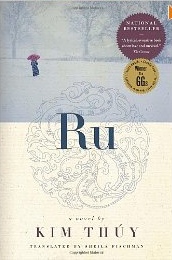
Kim Thuy, Ru
Ru is a lullaby for Vietnam and a love letter to a new homeland. Ru: in Vietnamese it means lullaby; in French it is a small stream, but also signifies a flow - of tears, blood, money. Kim Thúy's Ru is literature at its most crystalline: the flow of a life on the tides of unrest and on to more peaceful waters. In vignettes of exquisite clarity, sharp observation and sly wit, we are carried along on an unforgettable journey from Saigon to Malaysia to life in Quebec. As an adult, a mother of two sons, she must learn to shape her love around the younger boy's autism. Moving seamlessly from past to present, from history to memory and back again, Ru is a book that celebrates life in all its wonder: its moments of beauty and sensuality, brutality and sorrow, comfort and comedy. QEII, (Hd $16, pb to be released Nov. 27, 2012, 160pp) Note: French pb is available now!
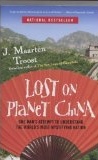
Maarten Troost, Lost on Planet China: or how I learned to love Squid
Maarten Troost brings China to life as you’ve never seen it before, and his insightful, rip-roaringly funny narrative proves that once again he is one of the most entertaining and insightful armchair travel companions around. A warning: Do not read this if you plan to visit China! If you insist on going, take along a breathing apparatus. This book has many faults, but it is an eye-opener! (400pp)
Charles Wilkins, In the Land of the Long Fingernails
During the hazy summer of 1969, Charles Wilkins, then a university student, took a job as a gravedigger in a vast corporate cemetery in the east end of Toronto. The bizarre but true events of that time -- a midsummer gravediggers'' strike, the unearthing of a victim of an unsolved murder, and a little illegal bone shifting -- play out among a Barnum-esque parade of mavericks and misfits in this macabre and hilarious memoir. (272pp)
IN 2011 - 2012, WE HAVE BEEN READING:
On June 9, 2011 we chose the following books to read. They are listed according to the date on which each will be discussed.
Almost all of our selections for this year are the A. C. Hunter library collection - The Lost Continent is in Torbay! The links below are to the Provincial Library pages for the books. The links from the pictures are to either Chapters-Indigo or Amazon.ca.
All books, except as noted, are available:
-> at Hunter Library
-> at QEII Library
-> through local bookstores and online
-> as eBooks
-
September 6, 2011
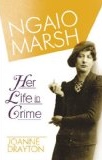
Ngaio Marsh: Her Life in Crime, Joanne Drayton [Not available online or in local stores or in QEII; however several copies can be borrowed from other members of the group. In addition, Hunter Library does have a copy.] -
October 4, 2011
Come Tell Me How You Live, Agatha Christie Mallowan [Not available in QEII or as an eBook; can only be purchased as used book.] -
November 1, 2011
Dying for Heaven, Ariel Glucklich -
December 6, 2011
For the Soul of France: Culture Wars in the Age of Dreyfus, Frederick Brown -
January 3, 2012
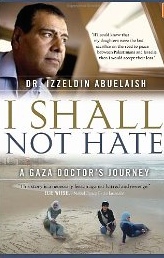
I Shall Not Hate: A Gaza Doctor's Journey, Izzeldin Abuelaish [Not available in QEII.] -
February 7, 2012
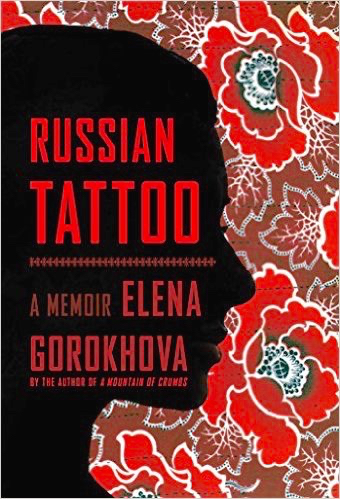
A Mountain of Crumbs, Elena Gorokhova -
March 6, 2012
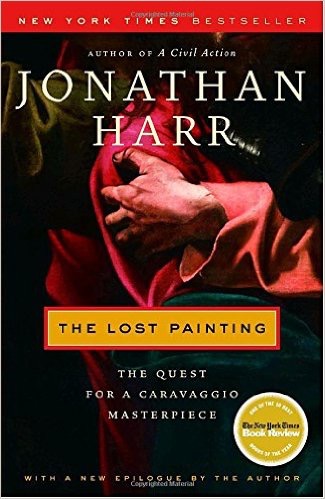
The Lost Painting, Jonathan Harr -
April 3, 2012
Presentations for 2012 - 2013 -
May 1, 2012
The Hare With Amber Eyes: A Hidden Inheritance, Edmond de Waal -
June 5, 2012
The Lost Continent: Travels in Small Town America, Bill Bryson [Available at Torbay Library! (As well as in QEII, as an eBook and in local bookstores.)]
plus voting on selections for 2012 - 2013
OTHER RECOMMENDATIONS FOR 2011 - 2012
Books are listed by author's last name, with the year in which a paperback version was published. If you would like to download the PDF file with all of our members' recommendations, click here.
-
Periodic Tales: A Cultural History of the Elements, from Arsenic to Zinc, Hugh Aldersey - Williams (2011)
-
Somewhere Toward the End, Diana Athill (2009)
-
Irish Journal, Heinrich Böll (2011) - an eccentric tour of Ireland in the 1950's
-
Four Fish: The Future of the Last Wild Food, Paul Greenberg (2010)
-
My Life as an Experiment : One Man's Humble Quest to Improve Himself by Living as a Woman, Becoming George Washington, Telling No Lies, and Other Radical Tests, A. J. Jacobs (2010)
-
The Facebook Effect: The Inside Story of the Company That Is Connecting the World, David Kirkpatrick (2011)
-
Quantum Man: Richard Feynman's Life in Science, Lawrence Kraus (2011 - Hardcover)
-
Stones into Schools, Greg Mortensen (2010)
-
How We Die: Reflections Of Life's Final Chapter, New Edition, Sherwin Nuland (1995)
-
Kasztner's Train: The True Story Of Rezso Kasztner: The True Story of Rezso Kasztner, Unknown Hero of the Holocaust, Anna Porter (2008)
-
Doctor Olds of Twillingate: Portrait of an American Surgeon in Newfoundland, Gary Saunders (1994) [Search by author, not title.]
-
The Cello Suites: J. S. Bach, Pablo Casals, and the Search for a Baroque Masterpiece, Eric Siblin (2010)
-
Extraordinary Canadians Lucy Maud Montgomery, Jane Urquhart (2009 - Hardcover)
-
Extraordinary Canadians Mordecai Richler, M. G. Vassanji
2010 - 2011 SELECTIONS:
'Hunter' means that this title is in the A. C. Hunter library collection. 'MUN' means that this title is in the MUN library collection.
-
September 9
The Dirt On Clean: An Unsanitized History, Katherine Ashenburg
Hunter, MUN
-
October 14Hunter
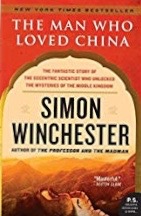
The Man Who Loved China, Simon Winchester
- November 11
People Who Say Goodbye, P. Y. Betts
-
December 9
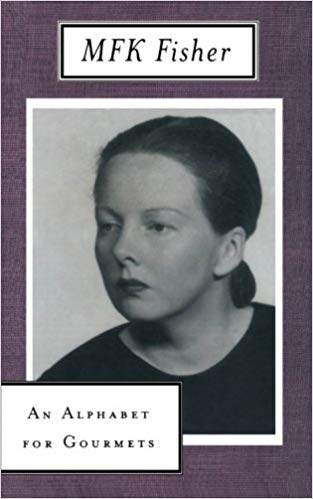
An Alphabet for Gourmets, M. F. K. Fisher -
January 13
Come, Tell Me How You Live, Agatha Christie Mallowan
Hunter -
February 10
The Omnivore's Dilemma: A Natural History of Four Meals, Michael Pollan
Hunter, MUN
-
March 10
The Secret Life of Words: How English Became English, Henry Hitchings
Hunter, MUN -
April 14
Presentations for 2011 - 2012 -
May 12
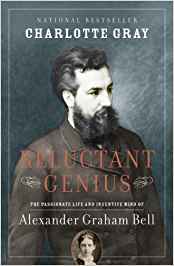
Reluctant Genius: The Passionate Life and Inventive Mind of Alexander Graham Bell, Charlotte Gray
Hunter, MUN -
June 9
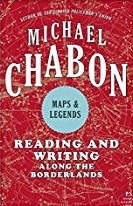
Maps and Legends: Reading and Writing Along the Borderlands, Michael Chabondbr