  Mario Blaser |
Mario Blaser
Currently my research interests can be summarized with the title of my graduate course: When Worlds Meet. What I am trying to work through is the idea that 'moderns' have a very particular way of producing the world they live in, one that is profoundly marked by the nature/culture divide. This is a very basic, ontological, assumption about how reality is constituted that express itself in a variety of ways: from the way in which we conceive what constitutes accurate knowledge to the way in which we conceive politics.
I look at this problematic through the various relations between modern institutions (from science to government) and the world that emerge from Aboriginal peoples' experiences and practices. The guiding insight here is that in many Aboriginal peoples' experiences and practices we can see examples of the World Social Forum's slogan, "Another World is Possible." In this sense, working with and learning from Aboriginal traditions opens up an avenue to address in unsuspected ways the challenges that we are facing nowadays from increasing inequality to the environmental crises.
At the same time I am very concerned with not being misinterpreted as a 'romantic' that offers an idealized example of Aboriginal peoples as the panacea to all the problems. Rather the point is to rescue from imposed invisibility the idea that there are other ways of existing that are viable while at the same time showing how those ways of existing struggle hard in the face of an encroaching modernity that cannot tolerate anything that differs from itself.
In the CURA project I am in charge of developing a documentary film telling the story of the people of NunatuKavut as this has been taking shape along with the research.
Some of the topics through which I address this general problematic include:
• The practices and politics of caring for non-humans
• Notions of a good life, from development to "Buen Vivir" (Living well)
• Natural resources vs. sentient landscapes
• Regional focus: Latin America and Labrador
 John Kennedy |
John Kennedy
I am a retired social anthropologist and taught at Memorial between 1973-2004. Social-cultural anthropologists use ethnographic methods to study small human communities. Ethnography requires that we travel to the locales that we are trying to understand, where we live with local people, interview them about their way of life, and ultimately, learn something of how they adapt to changing natural and social conditions. Ethnographic research is both difficult and rewarding.
I began conducting research in northern Labrador in 1971 and began research in southeastern Labrador in 1979. I have also conducted research in Mexico and Northern Norway. Central to most of my field research has been an emphasis on the historical circumstances affecting modern communities, community viability, and the questions surrounding identity and ethnic relations. My first fieldwork in northern Labrador focused on identity and relations between Inuit and people once called 'Settlers', people similar to today's Inuit-Metis. My time in northern Labrador prepared me to see the Inuit legacy in some of those I encountered in southeastern Labrador. I later confirmed these and other field observations during library research. Contrary to notions then prevalent among politicians and others in Newfoundland, peoples of Inuit ancestry also lived south of Lake Melville!
My work in CURA is twofold: new archival research and new ethnographic fieldwork on how Inuit-Metis considered their identity before the LMA – grandfather of NunatuKavut Commuity Councils. I will also edit the first book of CURA research and update my 1995 book, Peoples of the Bays and Headlands: Anthropological history and the fate of communities in the Unknown Labrador.
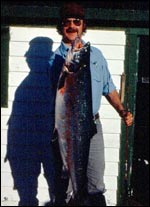
Finally, a word about the picture: Before the closure of the commercial salmon fishery, out at Cape Charles one July morning in 1979, a local salmon catcher netted a massive, 40 lb salmon. Seeing it, he suggested I pose with it. An old fishing rod was retrieved from a nearby stage and placed in my left hand. 'Okay John,' the salmon catcher directed, 'tell 'em you went fishing but you only caught the one!'
 Greg Mitchell |
Greg Mitchell
Greg Mitchell is currently the Senior Researcher for the NunatuKavut Community Council. He is co-author of the recent land claims filing entitled, “Unveiling NunatuKavut; Describing the Lands and People of South/Central Labrador.” During his forty year eclectic career he has found himself as a farmer, writer, logger, university instructor and environmental activist. He is author of a number of articles and publications on environment and history. He is the recipient of the Douglas H. Pimlott Award from the Canadian Nature Federation in 2000, for a lifetime of work in Canadian conservation, as well as a number of other environmental conservation accolades. He lives 'off the grid' near Gillams, Bay of Islands, Newfoundland, with his wife Lynn. He now enjoys his grandchildren, boating, hunting and finding things in archives which bring people and events alive again.
 Evelyn Plaice |
Evelyn Plaice
Dr Evie Plaice has studied land restitution processes in both Canada and South Africa, with specific interests in subsistence land use activities and how these shape ways of living and ethnic identity. Her most extensive ethnographic fieldwork has been on land claims and identity management with the Aboriginal people of Labrador, particularly the Metis of central Labrador (Plaice 1990, 2006, 2009 and 2010).
In Education, Evie's interests include Aboriginal knowledge systems, multicultural teaching, and post colonialism in education. She has been involved in establishing two new areas in Education: the Masters programme in Critical Studies in Education, developed and taught in conjunction with a working-group of colleagues; and the area of the Anthropology of Education, which she teaches through courses at both undergraduate and graduate levels.
Dr Plaice is the Principal Investigator on 'Before the Dam: Documenting Spoken Maliseet in Spiritual, Educational, and Cultural Context,' a four-year SSHRC funded research partnership with colleagues at the Wolastoq Language and Culture Centres in Tobique and Saint Mary's First Nations. Evie and her colleagues are collecting, translating and translating interviews conducted in Maliseet with Elder-speakers from the six Maliseet communities along the Saint John River valley. Materials from the data bank of interviews will be used by schools and communities to reinforce language use and revitalization (beforethedam.com).
As part of 'Understanding the Past to Build the Future' Evie and her graduate student, Will McGrath, are creating a virtual world portal through which to present Southern Labrador archaeological, historical, and ethnographic research materials for use in the school curricula. For more information see:
http://labradorcura.com
 Lisa Rankin |
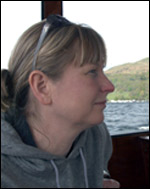
Lisa Rankin
I am the Principal Investigator of "Understanding the Past to Build the Future", and I am also an active member of the research team. I have been involved in archaeology throughout the Americas since I was a teenager and am currently an Associate Professor in the Department of Archaeology at Memorial University. In 2001 I began working in Labrador and was instantly charmed by the beauty of the place and the generosity of the people. Southern Labrador has been the primary focus of my research since that time. My investigations for the CURA project involve finding, excavating and analysing the Inuit archaeology in Sandwich Bay.
 Hans Rollmann |
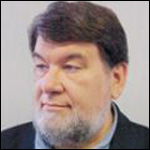
Hans Rollmann
I am a religious historian with a particular interest in Labrador. My research and teaching as a professor of religious studies at MUN on religion in Newfoundland and Labrador led me to an examination of the Moravian presence on Labrador's north coast. After the reunification of Germany, I had an opportunity to arrange the copying of the copious Moravian records and images at the Unity Archives of the Moravian Church in Herrnhut, Saxony, Germany. These and other archival materials, now at MUN, shed not only light on north coast history but also on Central and Southern Labrador. In the CURA project I look particularly at what these records reveal about relations of northern Inuit with Southern Labrador as well as the spread of religion and literacy in Central Labrador. I was also able to collaborate with fellow project members such as Patty Way and Lisa Rankin in shedding more light on their genealogical and archaeological work. Recently I published two articles related to my Labrador research: "Moravians in Central Labrador: The Indigenous Inuit Mission of Jacobus and Salome at Snooks Cove," Journal of Moravian Studies 9 (Fall 2010): 7-40 and "'So fond of the pleasure to shoot': The Sale of Firearms to Inuit on Labrador's North Coast in the Late Eighteenth Century," Newfoundland and Labrador Studies 26.1 (Spring 2011): 5-24. In future research as part of CURA I hope to open some windows to Labrador's past by examining the Anglican and Methodist presence in southern Labrador.
 Marianne Stopp |
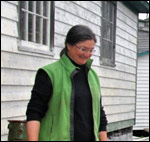
Marianne Stopp
I am an historian at the Historical Research Branch, Parks Canada. Thirty years ago I set foot in Labrador as a young archaeologist and have never looked back. My first fieldwork was at Red Bay, both on land and underwater, followed by many years of archaeological survey work along the coast and in the interior. During that time, I had the pleasure of walking and boating the entire southern coast from Blanc Sablon to Trunmore Bay. Not a day goes by that I do not think about Labrador; about amazing storms that have flattened camps, about countless boil-ups I've enjoyed, and - preparations for the next field season! Most of all, the friendships and comforts bestowed upon me and my crews over the years by the people of the coast have been the most unforgettable of all.
As part of this project, I am directing archaeological research that will show that Inuit have lived in southern Labrador year-round for much longer than previously thought. The evidence thus far ties in well with propositions made in my 2002 paper, "Reconsidering Inuit Presence in Southern Labrador" in which I lay out reasons why we can no longer think of Inuit as recent visitors to the southern coast interested only in obtaining European goods. I have also spent many years examining the historical documents relating to Labrador and have found great pleasure in writing about the lives of George Cartwright, as well as the Inuit Mikak and Tutauk, of Caubvick and Tuglavina, and Attuoick, Ickongoque, and little Ickeuna. It has been an honour and a pleasure to work with my fellow co-applicants on this project, and I believe we have already made many valuable contributions.
For more information visit the Labrador Inuit Archaeology in St. Michael's Bay web page.
 Patricia Way |
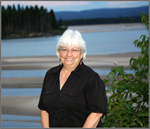
Patricia Way
My name is Patricia (Patty) Way and I am a Community Researcher with this project. My area of interest/expertise is Labrador genealogy. Since I was very young, I have tried to piece together the identity of our people based on a "Family Tree" pattern. Much more is known now than was in the 1960' s when I began, with assistance along the way from many elders long since passed; "Them Days"; Bernie Heard Sr.; Jason Curl; Wally McLean; and in recent times, Hans Rollmann; John Kennedy; and Elsa Flack. The story of early settlement of Labrador may never be complete, but with the research efforts and focus through this CURA project, access to all known sources available at this time will be complete. This will represent a lifelong dream for me. Sharing the older information, 100 years ago or more, of most families will be possible through this website when finished.