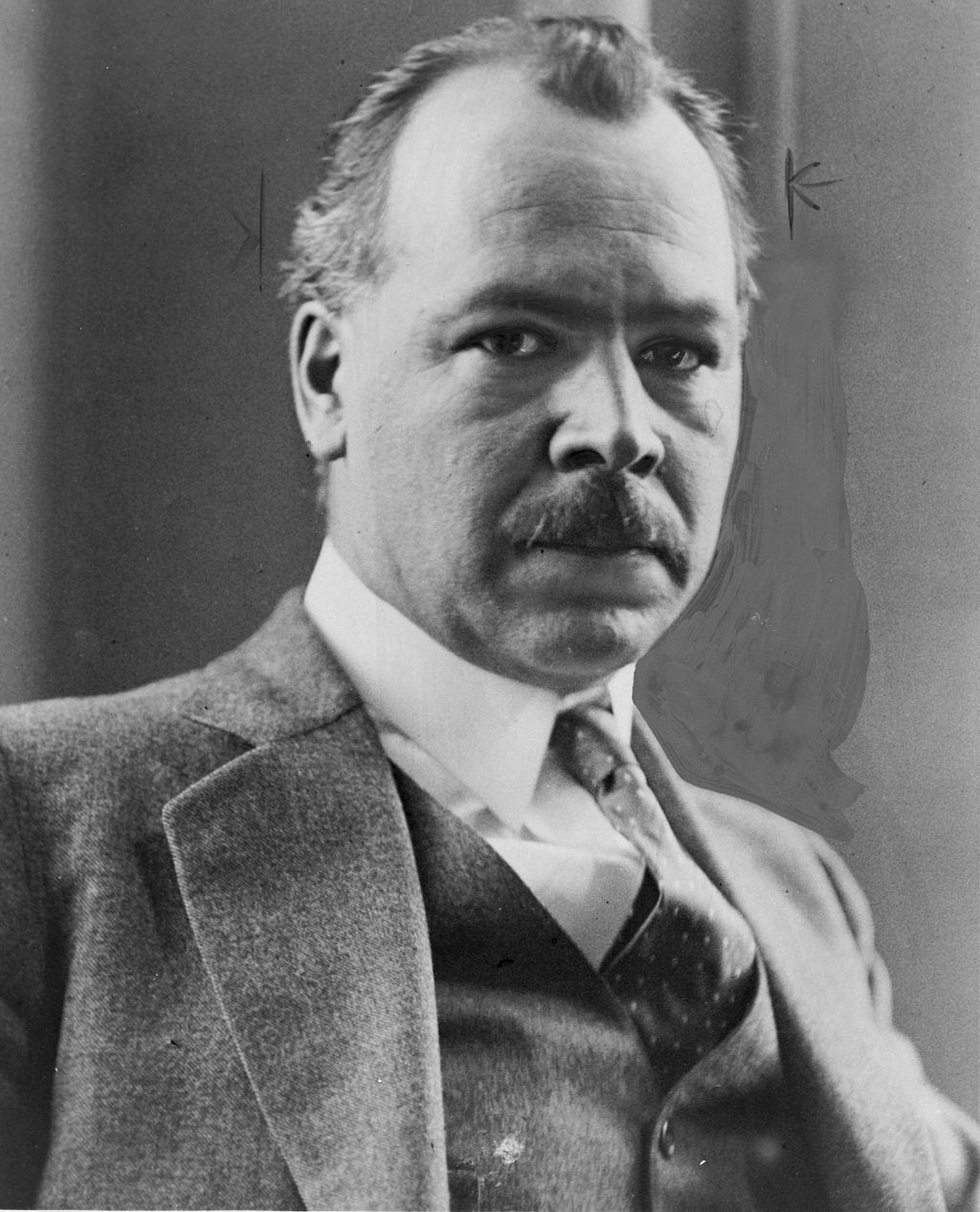
Nikolai Vavilov (1887 - 1943)
Nikolai Ivanovich Vavilov (1887–1943) was a Russian geneticist, botanist, and agricultural explorer whose research transformed knowledge of crop diversity. He graduated from the Moscow Agricultural Institute in 1911, and studied with William Bateson in England. He held major scientific posts in the Soviet Union, and based agriculture on principles of genetics, evolution, and systematics.
Vavilov assembles an immense collection of crop varieties
(the first true seed banks) and their wild relatives
from Asia, Europe, Africa, and the Americas.
He proposed that geographical concentrations of crop
diversity revealed centers of agricultural origin, and
provide resources for crop improvement. His Law of Homologous
Series described parallel patterns of hereditary
variation among related species and genera. These patterns
could guide searches for useful traits in crops and their
relatives.
The Soviet union had been plagued with a series of disastrous crop failures. Vavilov and other geneticists and crop breeders proposed to ameliorate these through conventional, proven methods of genetic improvement. Though skeptical, initially encouraged Trofim Lysenko’s vernalization experiments as potentially useful, but afterward strongly opposed Lysenko’s political attacks of Mendelian genetics. With Stalin’s political support, Lysenko assumed a major role in Soviet biology, and turned scientific disagreement into personal persecution. Having been elected as President of the International Congress of Genetics for 1940, on 6 August 1940, the Soviet NKVD arrested Vavilov during a botanical expedition in western Ukraine. His death sentence was reduced to a twenty-year prison term. Vavilov died in Saratov Prison on 26 January 1943 from severe deprivation and starvation. His posthumous rehabilitation came in 1955, and his scientific legacy endures in crop conservation, agricultural genetics, and the international network of seed banks.