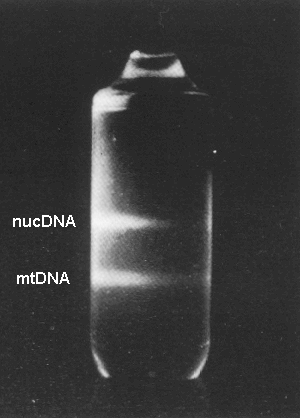
Preparative
density-gradient ultracentrifugation of DNA
(SM Carr
& OM Griffiths.1987. Biochem Genet 25:385-390)
Preparative
density-gradient ultracentrifugation of DNA
(SM Carr
& OM Griffiths.1987. Biochem Genet 25:385-390)
Under high
centrifugal force, a solution of cesium chloride (CsCl) molecules will
dissociate.The heavy Cs+ atoms
will be forced away from the center towards the outer end of the
tube, but will at the same time diffuse back
towards the top of the tube, thus forming a shallow density
gradient. DNA molecules placed in this gradient will
migrate to the point where they have the same density as the
gradient (the neutral buoyancy or isopycnic point).
The gradient is sufficient to separate types of DNA with
slight differences in density due to differing [G+C]
content, or physical form (e.g., linear versus
circular molecules).
In the
experiment above, after centrifugation for 10 hrs at 100,000
rpm (450,000 x g), two
distinct bands, corresponding to sheared linear nuclear DNA
above and circular mitochondrial DNA below, are visible
under ultraviolet light. The DNA has been mixed with
the intercalating dye ethidium bromide,
which enhances the density difference between the two forms and
causes the DNA to
fluoresce. The separate bands are collected by poking a hole in
the bottom of the tube. The intact mtDNA is available for further biological
analysis.