Evolutionary species and chronospecies
Evolutionary species and chronospecies
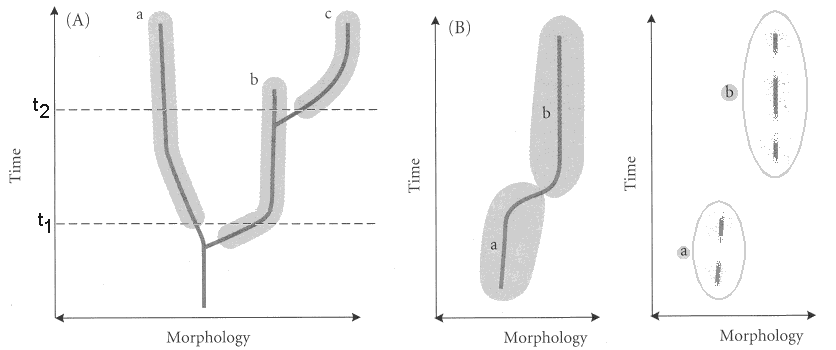
(A) Evolutionary species. Forms a, b, & c are representatives of distinct lineages of ancestor - descendant species (grey shading) that undergo morphological change over time. Forms a & c are contemporary species, form b is a fossil species that disappeared by extinction. Form b arose by speciation at t1 , diverged morphologically from a, and persisted unchanged after speciation of form c at t2. Notice that the shaded ranges of variation in each species are all distinct on the "morphology" axis.
(B) Chronospecies. [Left] A single lineage evolves over time from the ancestral form a into a morphologically distinguishable form b. If the connection is recognized, both forms will be assigned to a single evolutionary species. [Right] Alternatively, if the fossil record of the lineage is incomplete, forms a & b may be regarded and named as separate biological species. Form a undergoes a "pseudoextinction" when it evolves into form b.
Homework:
What
are the similarities and differences between the
situations
of forms a & b in part (B) versus those of forms b
& c in part (A)? (after Futuyma 1997).
Text material © 2026 by Steven M. Carr