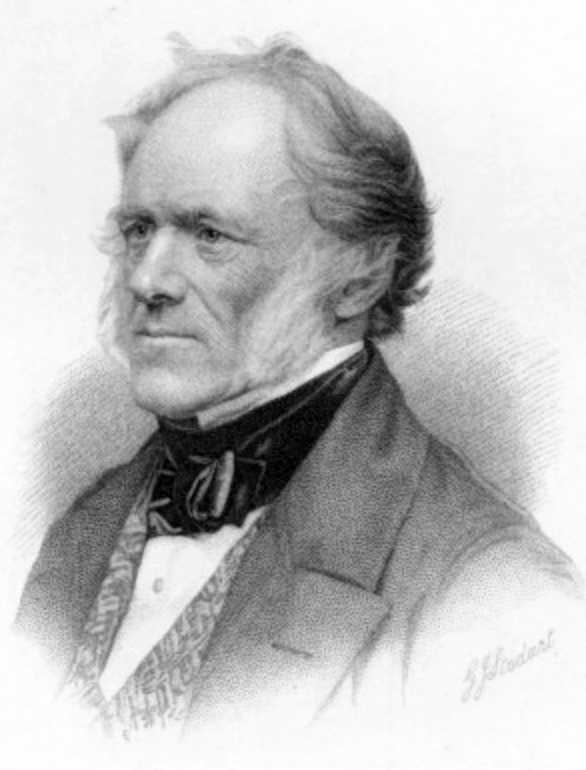
Charles Lyell (1797-1875)
Following up on the work of James Hutton, Lyell was
the principal proponent of the geological theory of Uniformitarianism,
which proposed that the Earth's geological features could be
understood in terms of observable, gradual processes (such as
floods, glaciers, volcanoes, & earthquakes) operating over
vast periods of times (millions of years). This replaced the
previously accepted theory of Catastrophism, in which
geological features were understood as consequences of rapid,
catastrophic events (principally Noah's Flood) operating over
a very short history (the few thousand years since the
Creation). Lyell's "Principles of Geology"
(1830) was a strong influence on the young Charles Darwin
while aboard HMS Beagle.
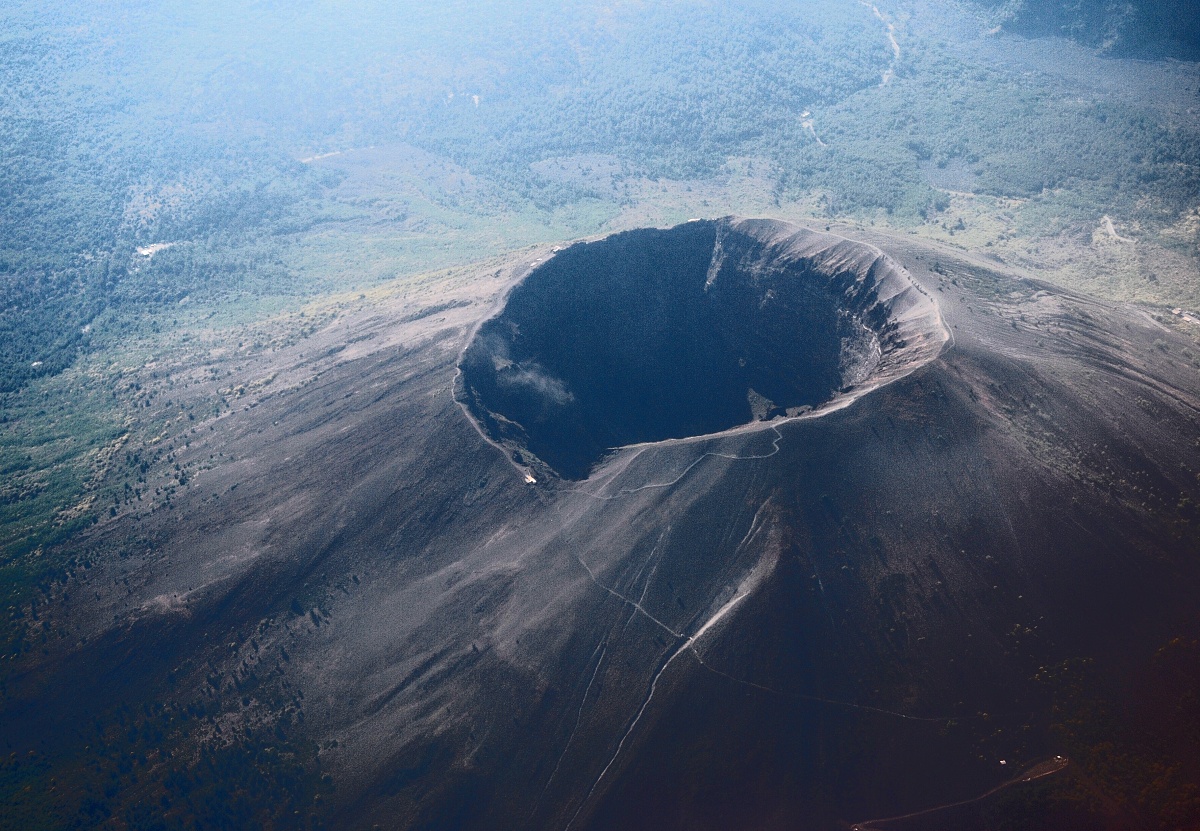
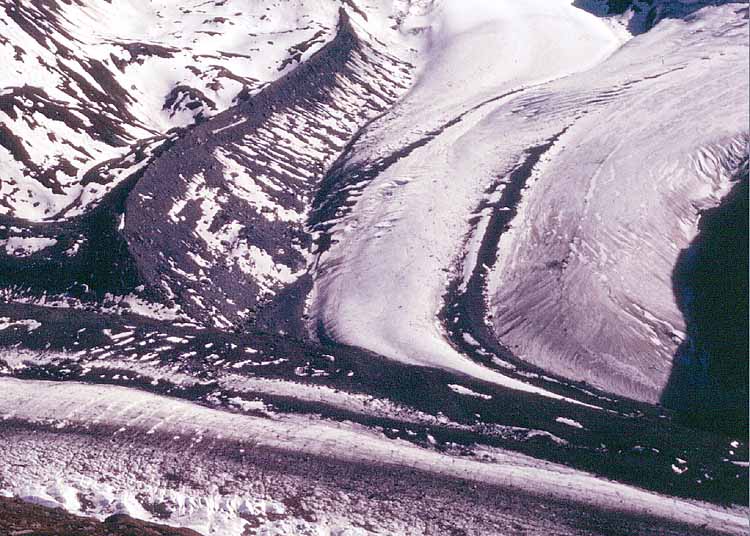
Gradual processes
include vulcanism (the caldera of Mt Vesuvius in
Italy [left]) and glacial scouring (Zermat Glacier,
Switzerland [right]).