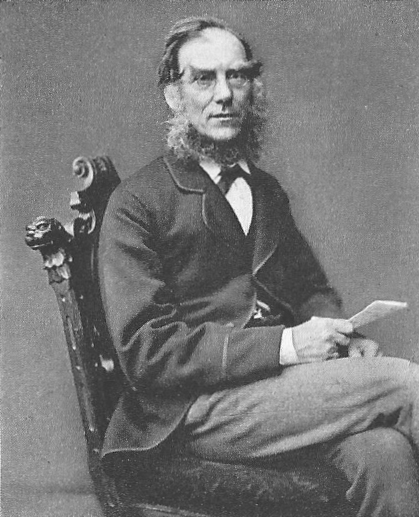
Joseph Hooker (1817 - 1911)
Sir Joseph Dalton Hooker (1817–1911) was a British
botanist who helped establish the science of plant biogeography.
He trained in medicine at Glasgow and was assistant surgeon
aboard HMS Erebus.
On Ross’s Antarctic expedition (1839–1843), he collected
plants across the southern oceans, and published major works
on the floras of Antarctica, New Zealand, and Tasmania. From 1848, he explored
the Himalayas and northeastern India, studying how plants
varied with altitude and climate. Hooker
was a particular friend of Charles Darwin, and repeatedly
urged him to publish his theory of evolution by natural
selection. Along with Huxley, he was instrumental in having
Darwin's sketch of Natural Selection read along with Alfred
Wallace's letter before the Linnean Society in 1858, as a
prelude to Darwin's composition of the "Origin of Species"
in 1859. Hooker supported Darwin's theory with examples from
Botany, along with the American biologist Asa
Gray.
Hooker served as Director of the Royal Botanic Gardens at Kew (1865 - 1885), which he redefined as an international centre for botanical research. The large green house there [below] house plants originally imported by Sir Joseph Banks on the 1770's Cook expeditions, including the world's largest house plant. He also served as president of the Royal Society, and continued working into advanced age. He is remembered for his ability to connect classical descriptive botany with larger questions about where species live and how they came to be distributed there.
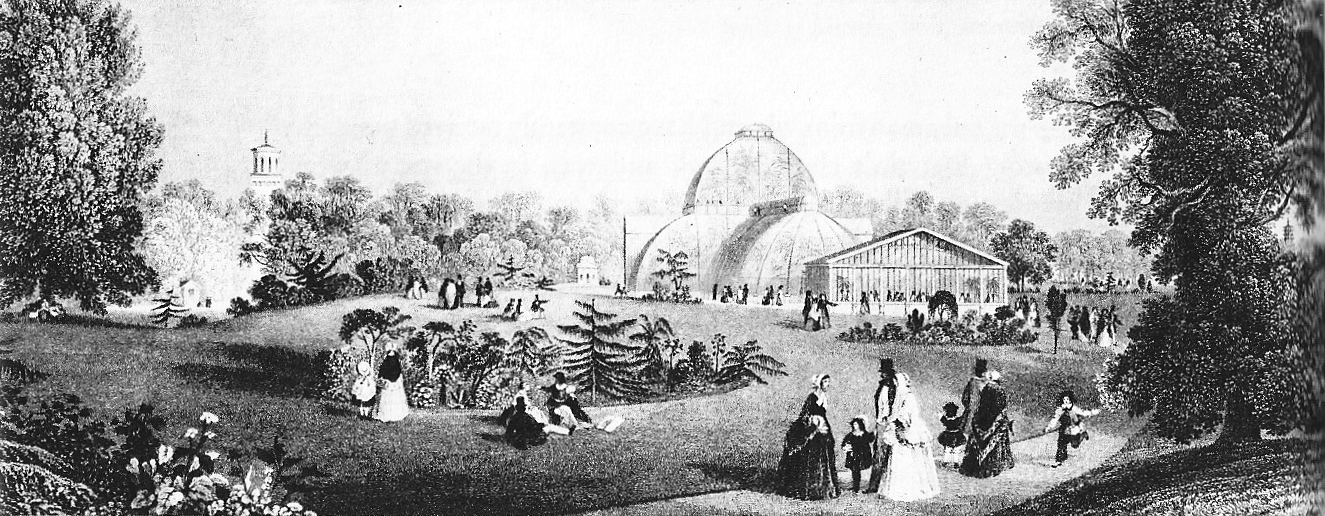
Kew Gardens (ca. 1875)