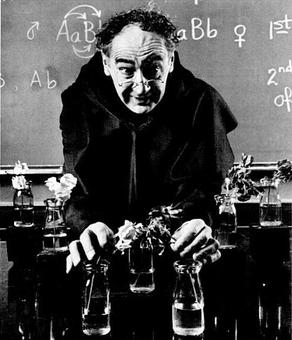
Richard M. Eakin (1910 – 1999)
Richard Marshall Eakin (1910 – 1999) was an American zoologist and embryologist whose research on photoreceptors and theatrical lectures brought him distinction at the University of California, Berkeley. Born in Florence, Colorado, he turned toward zoology and transferred to UC Berkeley. He earned his BSc in 1931, and his doctorate in 1935. He studied with Hans Spemann in Nazi Germany before he returned to the Berkeley faculty. His career there spanned nearly fifty years.
Eakin's research concerned investigated amphibian development, and the structure and evolution of light-sensitive photoreceptor organs. He examined the fine structure of photoreceptors, especially those of the parietal or “third” eye of lizards and comparable organs in amphibians. His work connected cell structure with broader questions about the evolutionary relationships among sensory systems. He published The Third Eye (1973), and the widely-used Vertebrate Embryology: A Laboratory Manual. At Berkeley, he chaired the Department of Zoology from 1942 - 1948 and 1953 - 1957, and he helped strengthen its national reputation.
Starting in 1970, "struck one morning in the shower by both water and an idea," Eakin introduced a series of historical impersonations into his introductory zoology course. With period costuming, makeup, props, and scripts that drew upon historical sources, he portrayed William Harvey, Charles Darwin, Gregor Mendel, Louis Pasteur, William Beaumont, and his former mentor, Hans Spemann. William Harvey was his personal hero among scientists, and he had personal knowledge of Hans Spemann. These “guest lecturers” were overwhelmingly successful, and conveyed scientific ideas through the ambitions, setbacks, and achievements of the people behind them. He brought his scripts of the six portraits together in Great Scientists Speak Again (1975). After his retirement in 1977, he continued these appearances, and lectured in embryology and introductory biology at a number of Historically Black Universities and Colleges (HBUCs). His career united experimental research, devotion to students, and an unusually vivid approach to the history of biology, for which he garnered almost every award given to UC Berkeley faculty.
Text material © 2026 by Steven M. Carr