Four
levels of
Protein
Structure
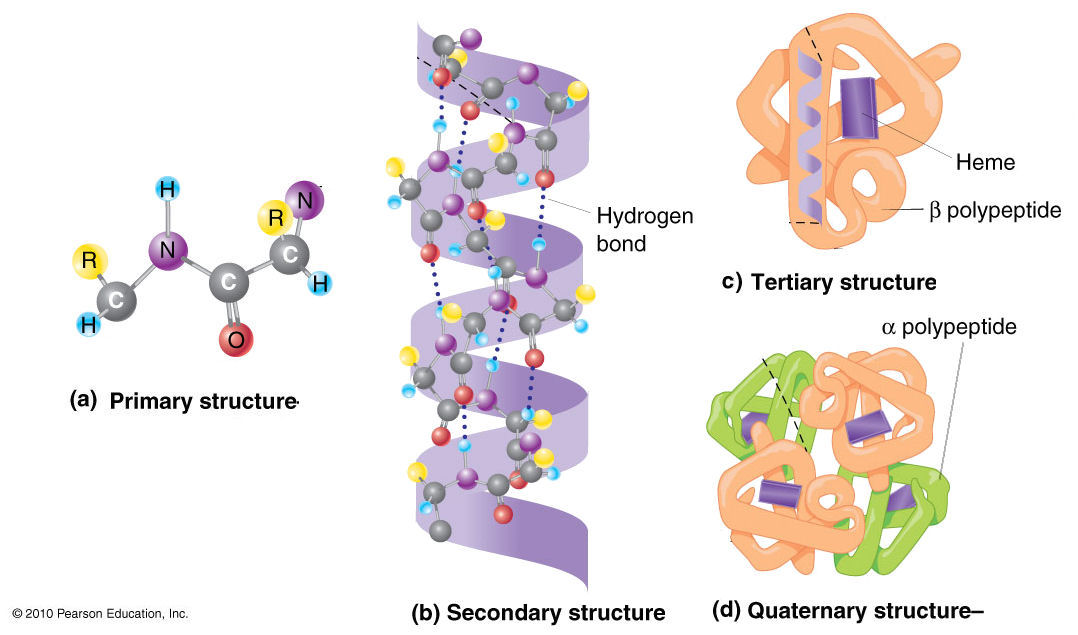
(a) The primary
structure is the succession
of amino acid residues, usually abbreviated by the 1- or
3-letter
codes.
(b) The secondary
structure
is the 3-D arrangement of the right-handed alpha helix
(shown here), or
alternative structures such as a beta-pleated sheet.
(c) The tertiary
structure is the 3-D
folding of the alpha helix
(show
as a purple ribbon), shaped by structures such as proline corners, disulfide bridges between
cysteine residues,
and electrostic
bonds.
(d) Where more than one protein chain
contributes to the protein, the quaternary
structure is the arrangement of these subunits. In
hemoglobin as shown here, the quaternary structure comprises
two alpha and two beta polypeptides, held
together by
elecrostatic bonds.