Levene's Tetranucleotide Hypothesis (1910)
Following
establishment that nucleic acids were localized in the
chromosomes, early experiments suggested that the four
base molecules adenine,
guanine, cytosine, and thymine occur
in approximately equal ratios.The Russian-American biochemist
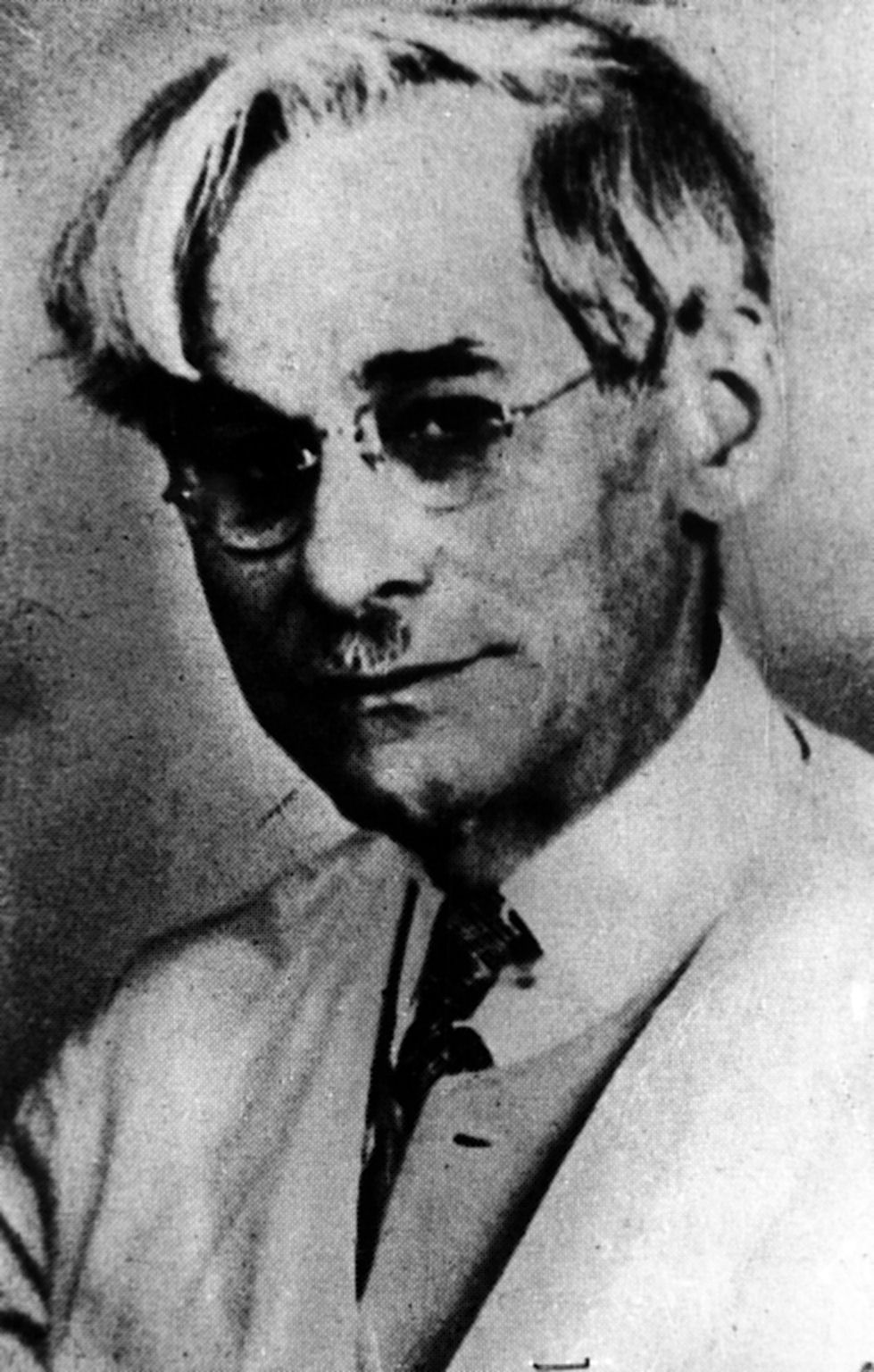
Phoebus Levene
(1869 - 1940), who had discovered ribose sugar in 1909 and went on to discover
deoxyribose sugar in
1929, suggested that
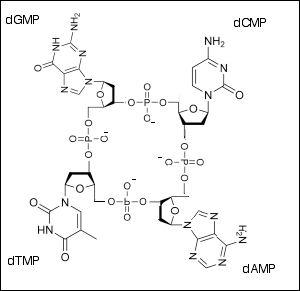
the structure of nucleic acid was a repeating tetramer. He called the phosphate - sugar - base unit
a nucleotide.
The simplicity of this structure implied that nucleic acids
were too uniform to contribute to complex genetic variation.
Attention thereafter focused on the other component of
chromosomes, protein,
as the probable hereditary substance.
Note that in this model, adjacent
sugar molecules are connected by a 3'-5' phospho-diester linkage
and bases are attached to the 1'-C of the sugar,
just as in the Watson-Crick
model. However, each tetranucleotide component is a
separate molecule, and the bases are directed to the outside.