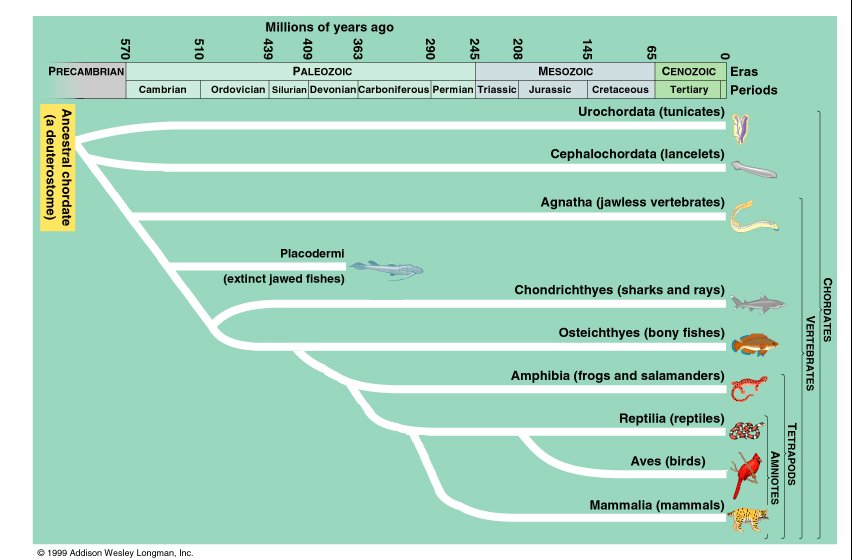
Phylogeny of Chordata & Vertebrata
Chordates evolved from deuterostomic coelomates. Living Urochordata (Tunicates, sea squirts) provide models of their development. Living Cephalochordata (Amphioxus) provide a model for the basic body plan of early chordates and vertebrates.
The Vertebrata are characterized by the deposition of CaPO4 as bone and development of a backbone. The groups identified above correspond roughly to the seven traditional classes of Vertebrata, some of which are poly / paraphyletic. For example, the jawless Agnatha are a polyphyletic group that includes hagfish (Myxiniformes) and lampreys (Petromyzontiformes), which though superficially similar are only very distantly related. Jawed vertebrates (Gnathostomata) form a monophyletic group. The extinct Placodermi are an eighth class of fish-like vertebrates with a distinctive cranio-vertebral joint.