Human karyotypes: 2n = 48 or 46?
Early studies of
the human karyotype simply stained chromosomes
within cells with Giemsa and "squashed" them between the cover slip and
slide. Most cells were not at the proper mitotic phase for
chromosomes to be observed, and chromosome separation was
poor. The exact count was uncertain: most workers accepted
the number 48. The
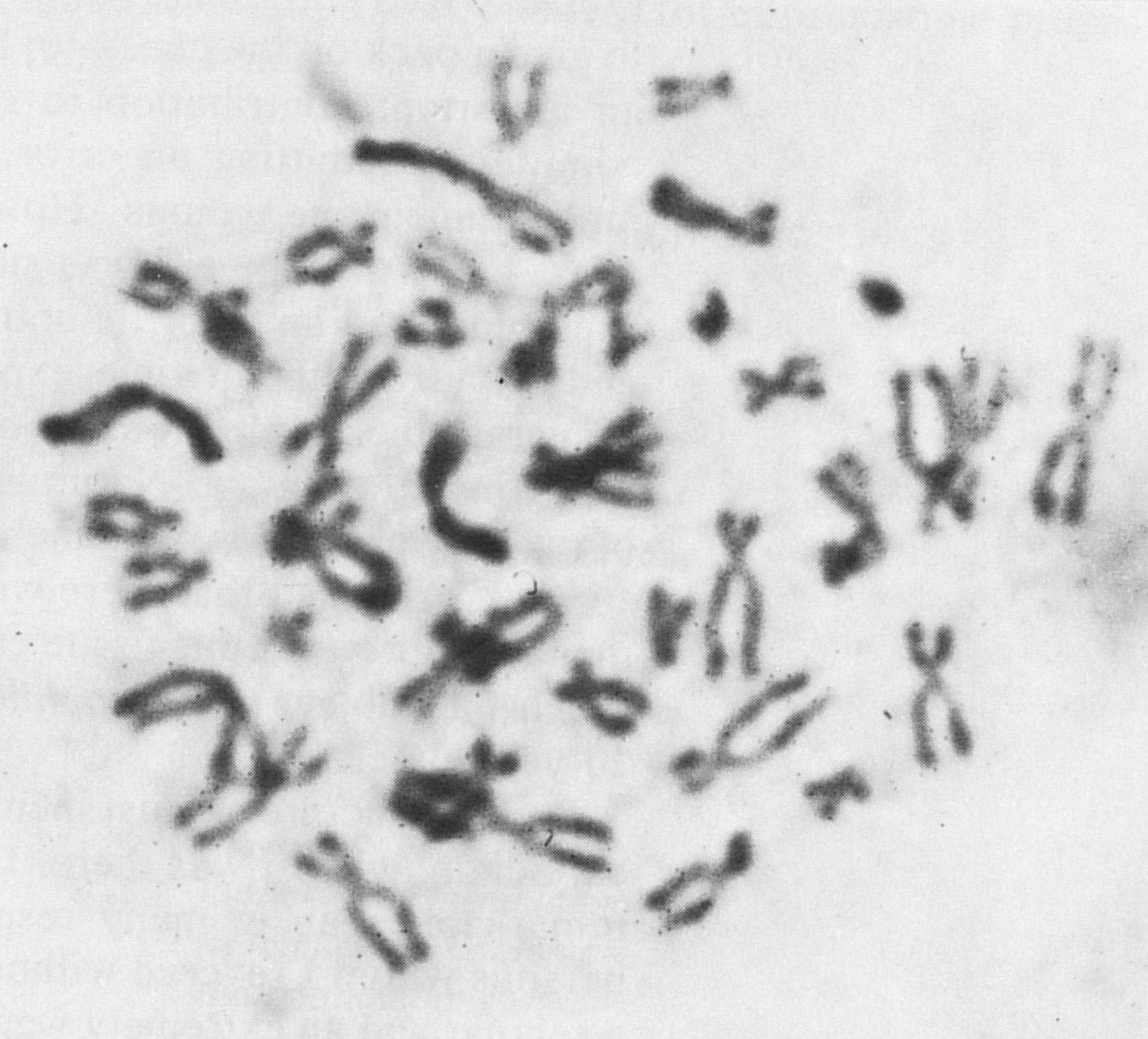
breakthrough came in 1952 (left) when a technician in the
lab of TC Hsu
accidentally substituted distilled water for the normal
saline solution used in washing the cells just before "squashing". This "hypotonic" treatment
caused the cell nuclei to swell, and allowed the chromosomes
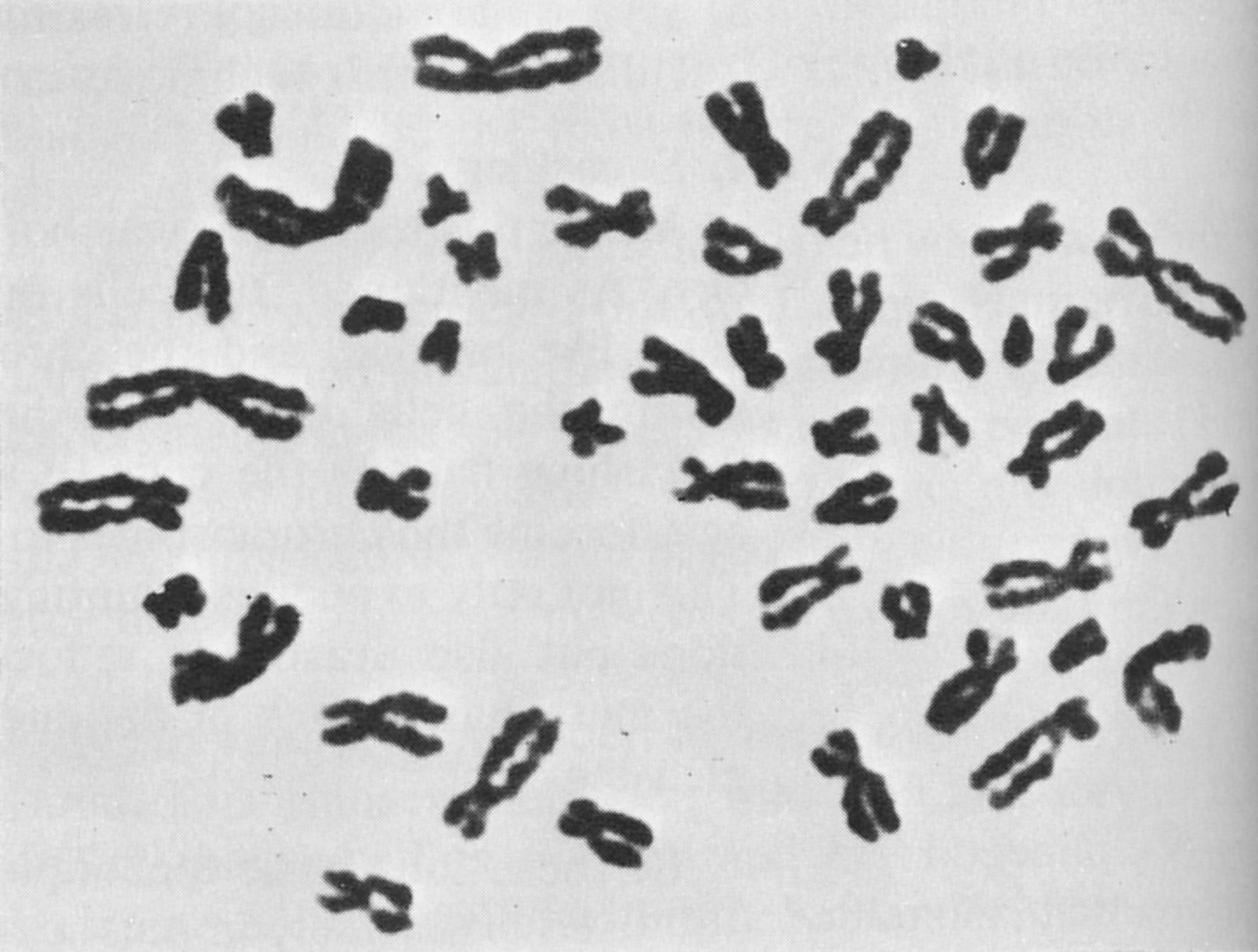
to separate before squashing. A further refinement was "dropping" the cells
onto the slide at arm's length, which caused the nuclei to
burst on impact, further separating them (middle). Finally,
the use of a plant spindle-poison Colchicine allows
chromosomes to be arrested at mitotic metaphase,
during their maximum state of compaction [right]. These
experiments allowed JH Tjio & A Levan
(1956) to establish the human chromosome number as 2n = 46 chromosomes: the
"24th" pair turned out to be a pair of satellites on
the ends of another pair.
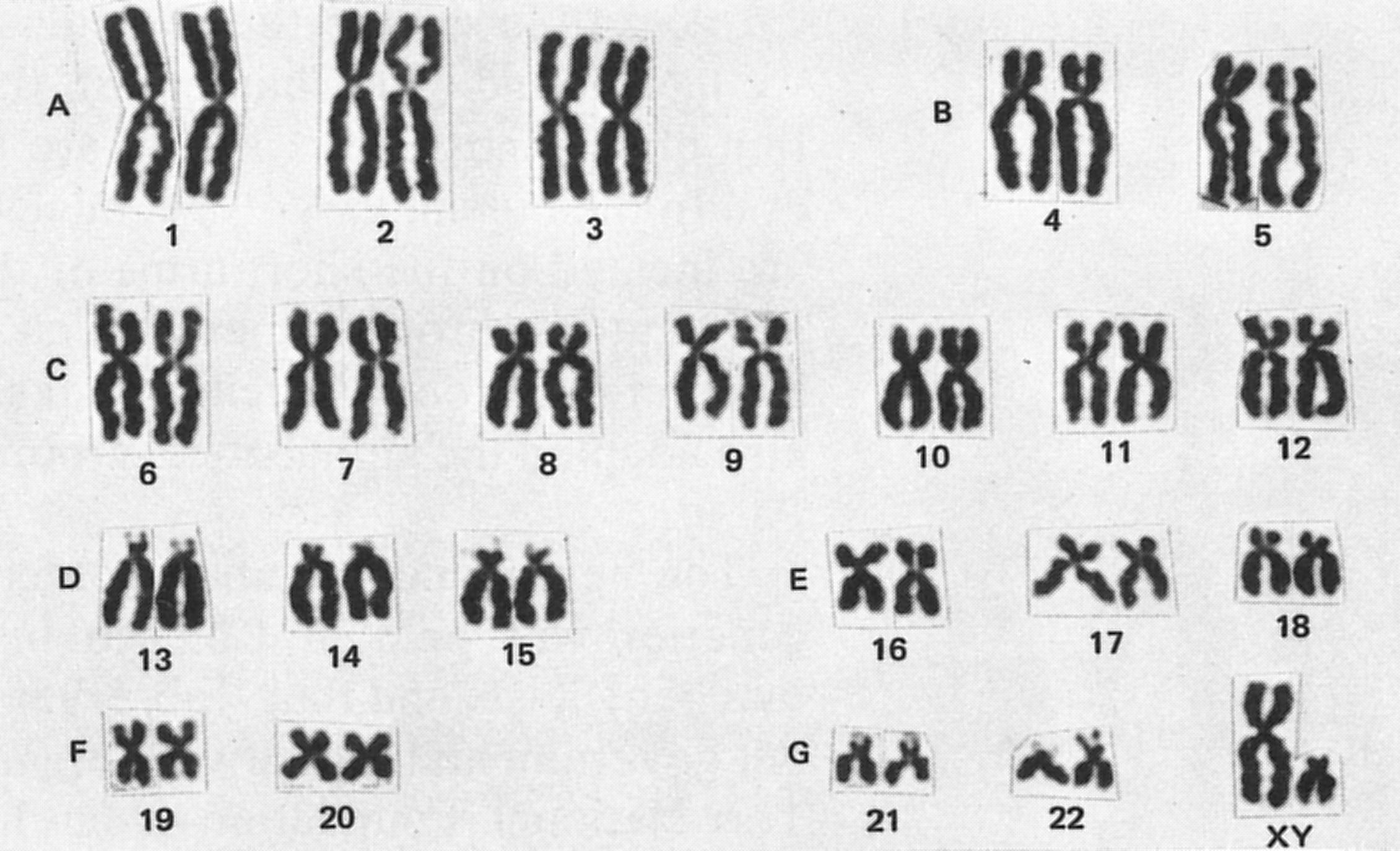
Classification of chromosomes into seven groups by size and relative centromere position established the so-called "Denver System" (right) in 1960. Chromosomes within groups B - G were not readily distinguishable from each other. The X chromosome is in the C group, and the Y is in the G group: males are recognizable by five small G-type chromosomes. Modern banding techniques allow each chromosome in the karyotype to be distinguished individually.
Classification of chromosomes into seven groups by size and relative centromere position established the so-called "Denver System" (right) in 1960. Chromosomes within groups B - G were not readily distinguishable from each other. The X chromosome is in the C group, and the Y is in the G group: males are recognizable by five small G-type chromosomes. Modern banding techniques allow each chromosome in the karyotype to be distinguished individually.