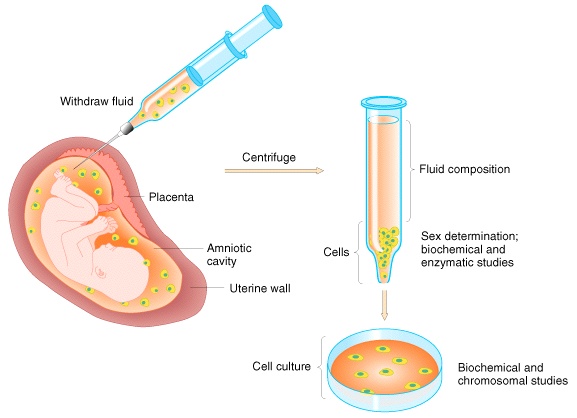
Genetic
information about a fetus can be obtained by analysis of amniotic fluid or the shed
cells in the amniotic cavity.
In the amniocentesis
procedure, fluid is withdrawn by means of a needle inserted
through the amnion into the placental sac. Biochemical analysis of the
fluid itself may indicate a genetic condition (e.g., high levels of phenylalanine may indicate PKU). Karyotypic analysis of shed
fetal cells can be used to determine gender (Barr body determination), or
more specific karyotypic conditions (e.g., Down Syndrome or Trisomy-21). Direct
analysis of DNA by various RFLP and PCR tests allows
for much more rapid diagnosis, an important consideration in
decisions about second trimester pregnancies.
The amniocentesis procedure entail some risk of
damage to the mother and/or fetus. In general, in the absence of
indications of specific genetic risk from family history,
amniocentesis is not recommended as a general prenatal screen.