Audioradiographs
Preparation
of an audioradiograph
The DNA gel is highly radioactive, and in order to have a
better look at the results, an audioradiogram
was
prepared. The gel, unlike slab gels, is a very thin gel with a larger
surface
area, in between two glass plates. The top plate is removed, and a
piece of
filter paper put in its place. Through the filter paper, the gel is
removed
from the lower plate. The gel on the filter paper is dried by placing a
vaccum below the gel, and baking it with a
heat lamp from
above. X-ray film is placed over the gel. The
radioactive
bands expose the film, resulting in an audioradiogram.
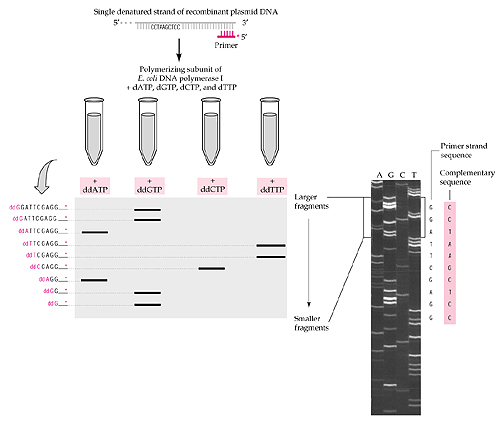
Each band on the electrophoresis gel is of different
weight,
and each band is radioactively labelled with 32P, which
causes it to
show up on the X-ray. Each reaction is loaded next to each other, so
that one
can compare band position.
Basically, take a ruler and determine to which of the reaction mixtures
each
consecutive band is a result of. If the band is a result of fragments
with the ddGTP inhibitor, the sequence is
read as a G for that
position.